)
Kilimanjaro Day Hike to Mandara Hut: What It Feels Like to Walk into Africa’s Highest Mountain Without Climbing It


Marangu Gate - Kilimanjaro National Park
1,860m Gate elevation
2,700m Mandara Hut
8 km One way
$170–250 Full tour / person
The forest
You Came for the Mountain. You Got a Forest.
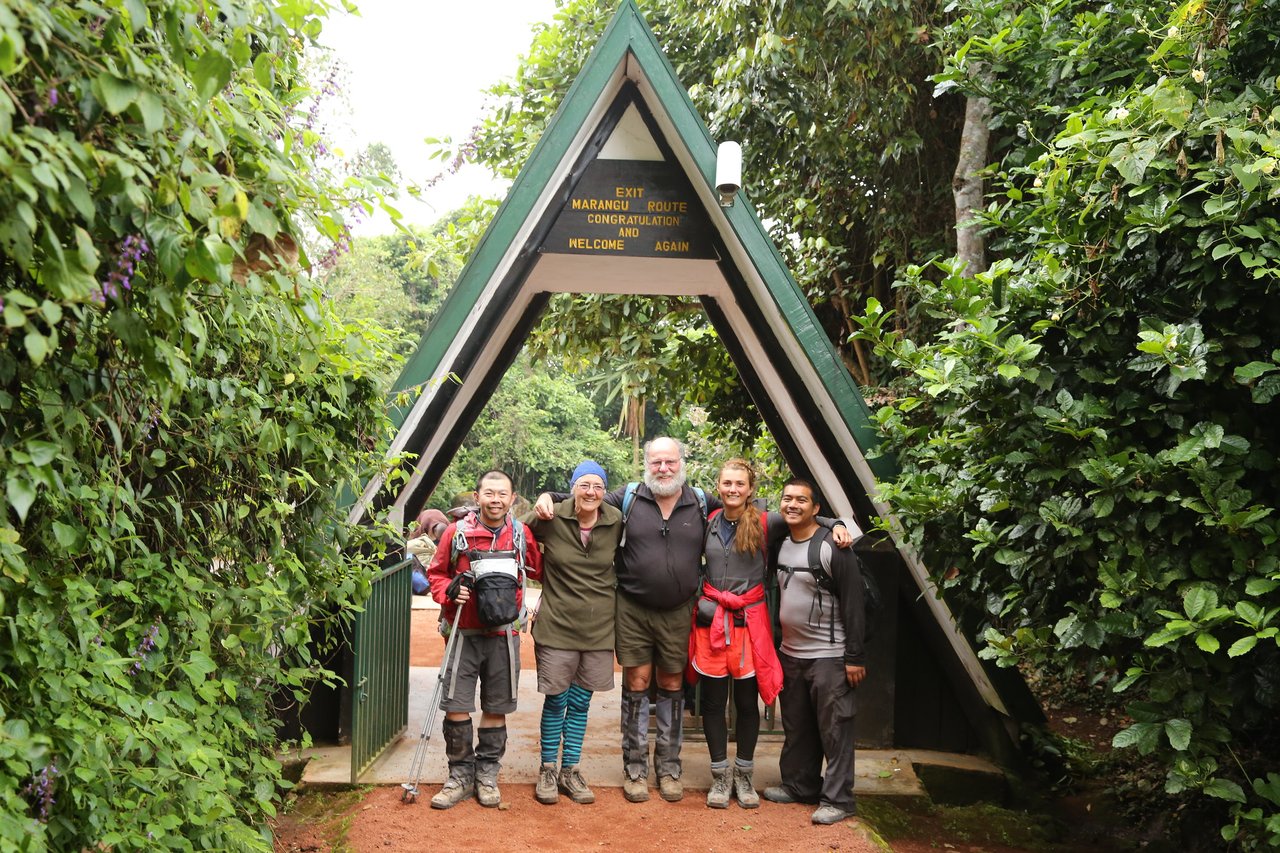
Most people arrive at the Marangu Gate expecting to see Kilimanjaro. A big view, open sky, the white cap in the distance. That is not what happens.
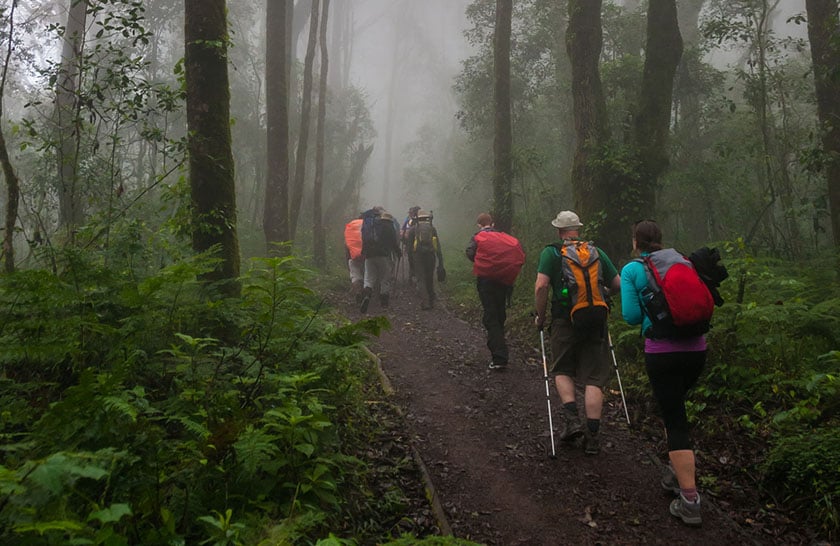
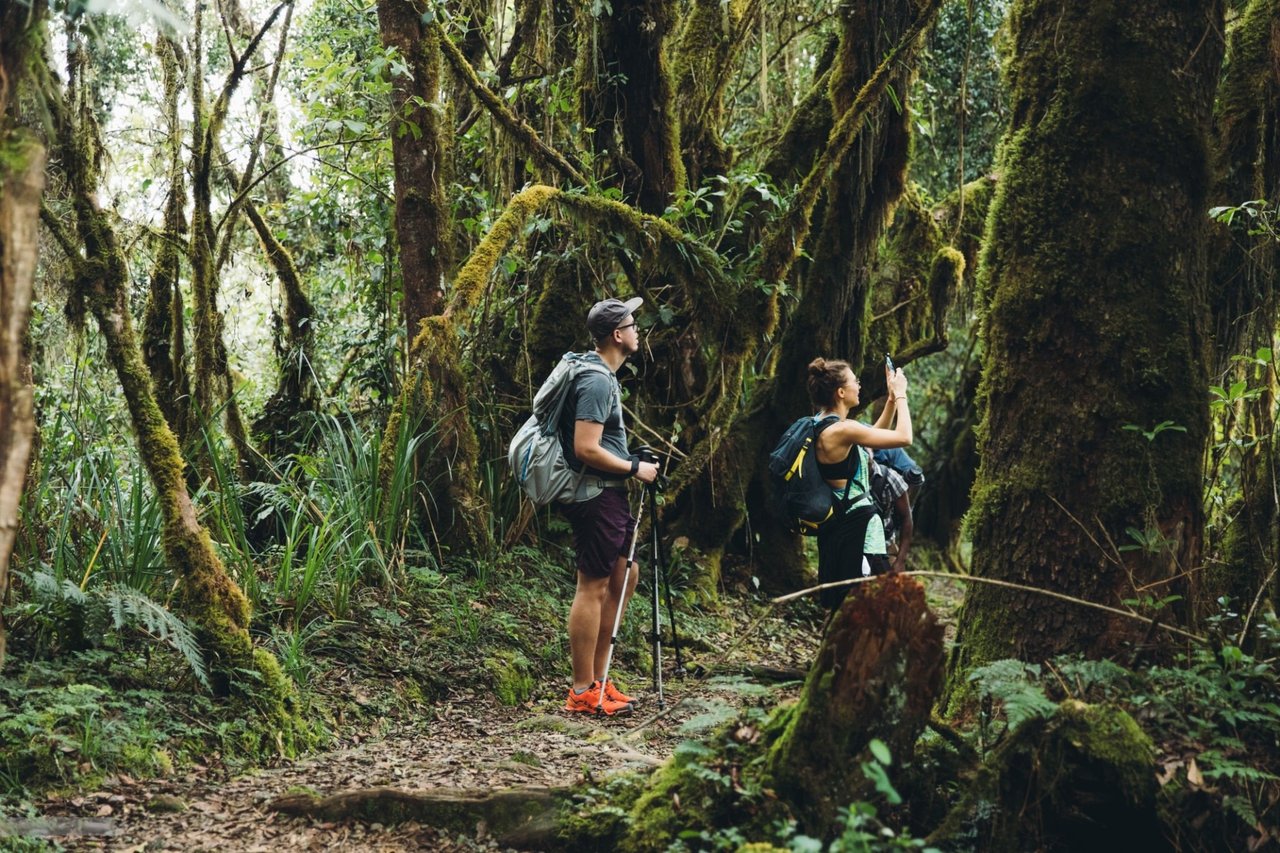
Ten minutes in, the trees close above you. The light turns grey-green. The air is cold and wet and smells like bark and soil that hasn't dried out in years. A colobus monkey moves in the canopy - you hear it before you see it. The road behind you has gone quiet. You can't see the summit. You can't see much past the next bend.
This is the mountain. Not the photograph of it. The inside of it.
“Most people who do this hike don't talk about the altitude when they get back. They talk about the forest.”
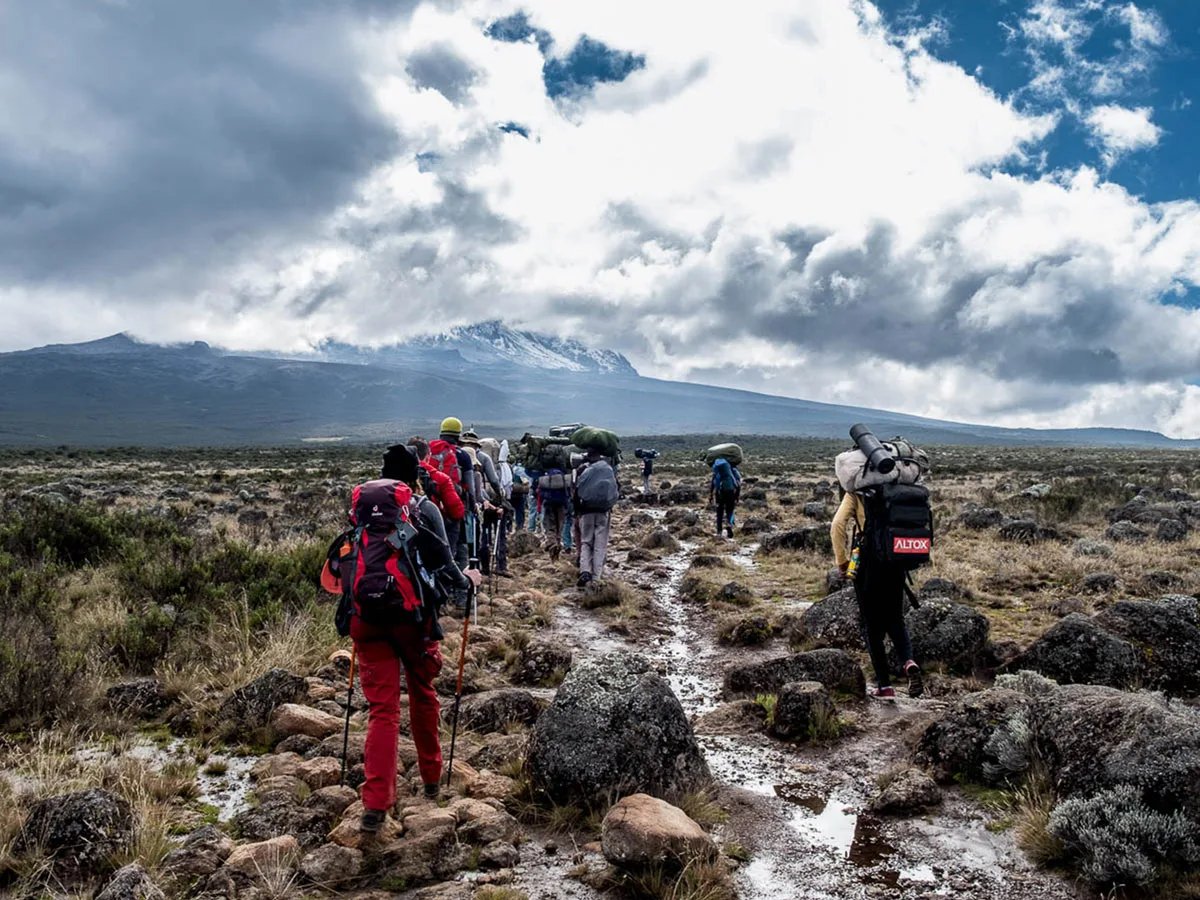
The trail from Marangu Gate to Mandara Hut is 8 kilometres one way, gaining 840 metres through montane rainforest. It's the same path summit climbers walk on Day 1 of the Marangu Route. The difference is you turn around at the hut instead of sleeping there.
The forest is wet, thick, and cold by mid-morning. Chameleons sit motionless on branches at eye level. The path is embedded stone and roots, which keeps your eyes down and your pace slow - which, as it turns out, is exactly right.
Before you book
Read This First.
This hike suits most fit adults. It is not a casual walk. Here is what the trail will ask of you - plainly.
⚠ On the difficulty
Your legs will feel the 8km uphill. The trail is embedded stone and roots the whole way, not flat path. In wet season, add mud to that. Budget 3–4 hours going up, 2–3 hours coming down. If your regular exercise is flat-ground gym cardio, the uphill will be harder than you expect.
⚠ On young children
TANAPA rules technically allow under-10s to hike to Mandara Hut at 2,700m. That doesn't mean it's a good idea. The trail is steep and uneven for hours. If your child is under 10 or not a strong hiker, take them to Materuni Waterfalls instead. Same forest, lower stakes, better day for everyone.
⚠ On altitude
2,700m is not serious altitude. But it is 1,800m higher than Moshi. Some people get a mild headache near the top. A small number feel genuinely breathless. Drink water throughout. Don't push the pace. If your head starts hurting on the way up, tell your guide.
⚠ On the views
You will not see the summit from this trail. The forest is too thick. If you want to look at Kilimanjaro, do it from the road in Moshi at 7am before the clouds build. This hike is about being inside the mountain, not photographing the outside of it.
⚠ On the cost
The park entry fee is $70 per person per day. That's before transport, guide, or lunch. A full guided day tour from Moshi runs $170–250 per person. This is the most expensive day trip from Moshi by a significant margin. Whether it's worth it depends on what you came to Tanzania for.
◆ Who this suits
Regular hikers. People planning a full summit attempt who want to test how their body handles altitude. Anyone who wants to be on Kilimanjaro without the expense and commitment of a multi-day climb. Older teenagers. People with two hours of sitting at a view from the Maundi Crater sounds like a good afternoon.
The trail
What the Trail Actually Asks
The path starts wide and well-maintained at the gate. It stays that way. Kilimanjaro National Park keeps the Marangu trail in good shape - this is the most-walked route on the mountain.
The first hour is through dense rainforest. The ground is almost always damp. The stones are worn smooth. Your guide will set the pace - and if yours knows what they're doing, that pace will feel slow. It should feel slow. This is how you arrive at the top without destroying yourself on the way up.
Pole pole - slowly, slowly - is not just a Kilimanjaro cliché. It is the correct instruction. Guides who work this trail regularly know exactly what speed keeps a mixed-fitness group feeling good at 2,700m. Follow their lead.
The trail steepens above 2,400m. That's when you'll feel the altitude starting. Not dramatically, but noticeably. Your breathing gets slightly more deliberate. You take the switchbacks one at a time. This is normal.
◆ On the guide
A licensed guide is a legal requirement inside the park - not a suggestion. On this trail, a good guide earns their fee. They know the forest, the plants, the birds, where the chameleons hide, and how to read a group that's flagging before the group knows it themselves. Don't skip this to save money.
The hut and the crater
Mandara Hut and What Comes After
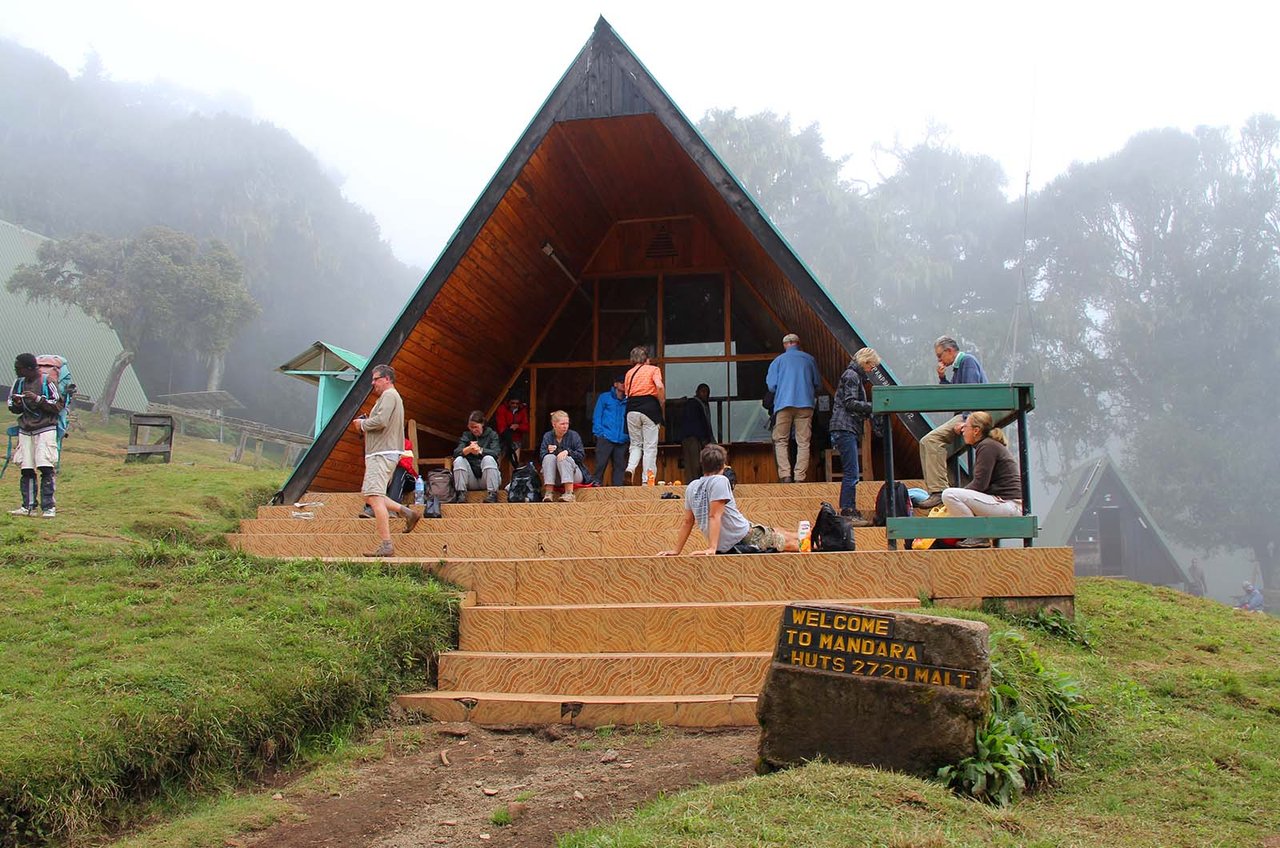
Mandara Hut at 2,700m is a cluster of wooden A-frame huts in a clearing. It is where full-summit climbers sleep on their first night. For you, it's where you stop, eat your packed lunch, and let your legs rest before the descent.
It's also where you'll see summit climbers coming through - people on their way up, or coming back down from higher camps. Talk to them if they're willing. Their accounts of the higher mountain are more honest than any tour operator's website. A climber who spent a night at Kibo Hut at 4,700m will tell you things worth knowing.
The Maundi Crater is a 15-minute walk from the hut. Do it. The crater rim breaks above the treeline and on a clear morning - which means before 10am, because the clouds build fast - you can see across the Kilimanjaro foothills into northern Tanzania and into Kenya. This is the view the trail doesn't give you. Build it into your plan.
Start the descent by early afternoon. You need to be back at the gate by 6pm.
The altitude test
Using This Hike Before a Summit Attempt
This is a practical point and it's worth taking seriously.
If you're planning a full Kilimanjaro summit attempt, you will spend five to nine days climbing toward 5,895m. Your body's response to altitude is something you can't test at sea level, at a gym, or on a flat road. You can only find out by going up.
At 2,700m on this hike, you will get your first real data point. If you arrive at Mandara Hut feeling strong, breathing normally, headache-free - that's good information. If you arrive feeling genuinely unwell, dizzy, or with a pounding headache - that's also good information. Better to have it now than on Day 4 of a summit climb when turning back costs you the whole trip.
This hike is not a guarantee of summit success. Altitude affects people unpredictably and the difference between 2,700m and 5,895m is significant. But it is the most useful data point you can collect before you commit to a week on the mountain.
The cost
What It Costs. Straight.
The park entry fee is $70 per person per day. There's also a one-time rescue fee of $20 per person. VAT of 18% is added to both. Your guide fee is separate, paid to the licensed guide or your operator. Your operator typically handles all of this - confirm what's included before you pay.
| What | Cost (USD approx.) | Notes |
|---|---|---|
| Park entry fee | $70 / person / day | TANAPA rate, subject to annual revision |
| Rescue fee | $20 / person | One-time, mandatory |
| Full day tour - solo/private | $200–250 / person | Includes transport, guide, lunch, fees |
| Full day tour - group of 2–4 | $170–200 / person | Shared vehicle and guide |
| Full day tour - group 5+ | $150–170 / person | Confirm inclusions before booking |
Is it worth it? If you're here specifically for Kilimanjaro - yes, probably. The park entry fee alone is steep, but it goes directly to TANAPA's conservation work. If you're on a tight budget and you want forest and mountain air without the park fee, Materuni Waterfalls covers similar terrain at a fraction of the cost.
What other hikers say
Real Reviews
“Beautiful, lush, well maintained, gruelling trail. Embedded stones were a challenge for sure. The wild flowers were stunning, and it was a treat to see monkeys.”
“If you don't have the time or funds to summit Kili, worry not. A great teaser with a chance to see Blue Monkeys along the way plus a stunning crater past Mandara Hut that also serves as a perfect picnic spot. Worth every dollar. Be ready to sing”
“The day hike allowed me to enjoy the rainforest, wildlife, and the peaceful atmosphere of the mountain. We hiked at a steady, comfortable pace and reached Mandara Hut, where the views expanded and the energy of Kilimanjaro truly set in. Even though it was just a day hike, it still felt like a memorable adventure.”
“The trail was not intimidating and it didn't require much energy at a sustainable pace. During this hike you will pass different vegetation, you have chances of seeing blue monkeys and some bird life. I was fortunate enough to see an animal I didn't know existed, the hyrax.”
Alternatives
If This Doesn't Fit
Materuni Waterfalls + Coffee Tour (Best budget option)
A hike to the 90-metre Materuni Falls on Kilimanjaro's lower slopes, combined with a Chagga coffee ceremony and lunch. Similar forest, lower altitude, no park fee. The better choice if cost is a real factor, or if you have children who aren't strong hikers.
Different from Kili day hike: No national park access. Lower altitude. Stronger cultural component.
Price: $34–60 / person
Link: wearetanzania.com/materuni-waterfalls
2. Marangu Route - Full Summit Climb (If you want more)
If the day hike goes well and you want to continue - the full Marangu Route is the same trail, continued. Five or six days to Uhuru Peak at 5,895m. The 6-day version with an extra acclimatisation day at Horombo Hut is consistently recommended over the 5-day version. The day hike is the best preparation for it.
Different from the day hike: Multi-day. Cold weather gear required. Much higher cost.
Price: $1,500–2,500 / person all-inclusive depending on operator and group size
3. Old Moshi Village and Forest Walk (Cultural + forest, no park fee)
The Old Moshi Cultural Tourism Enterprise runs guided walks through Chagga village and forest, with an optional extension to Kwa Mambori waterfall. Same ecological zone as the park. Fraction of the cost. Better choice if you want history and community alongside the forest.
Different from the Kili day hike: No park access. Lower cost. Stronger history component.
Price: $35–60 / person
Practical information
Everything Logistical
Location
Marangu Gate, Kilimanjaro National Park. ~40 km from Moshi town, ~1 hour by road via Himo junction.
Gate hours
Opens ~6:00 AM. All hikers must exit by 6:00 PM. Start hiking by 9:30–10:00 AM at the latest.
Transport
Tour operator pickup from Moshi is the standard approach. Self-drive possible (park at the gate). No public transport to the gate.
Documents
Passport required for park registration at the gate.
Boots
Waterproof hiking boots or grip trail shoes. Non-negotiable in wet season. Useful all year.
What to pack
Rain jacket · warm layer (10–15°C cooler at 2,700m than Moshi) · 2L water + electrolytes · sunscreen · trekking poles optional but useful on descent · small daypack · cash for tips
Best season
June–October (dry, firmest trail, best crater views). Jan–Feb also good. March–May and November: trail is muddy, showers likely, still doable but harder underfoot.
→ Getting to Marangu Gate from Moshi
Book the Day Hike
We arrange transport from Moshi, licensed guide, park fees, and packed lunch. One message covers it.