)
Mbege: Moshi's Traditional Banana Beer and Where to Try It
The Chaga have been brewing this for generations. Here's why it deserves a place on your Tanzania itinerary.


NORTHERN TANZANIA | CHAGA FOOD CULTURE
Mbege is not a tourist drink. It was never designed to be. And that, honestly, is the best reason to seek it out.
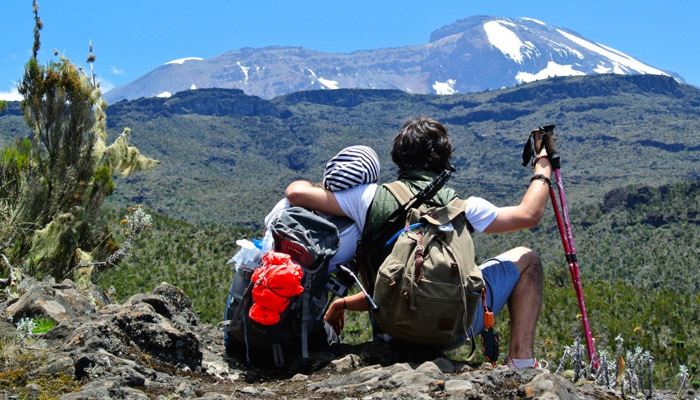
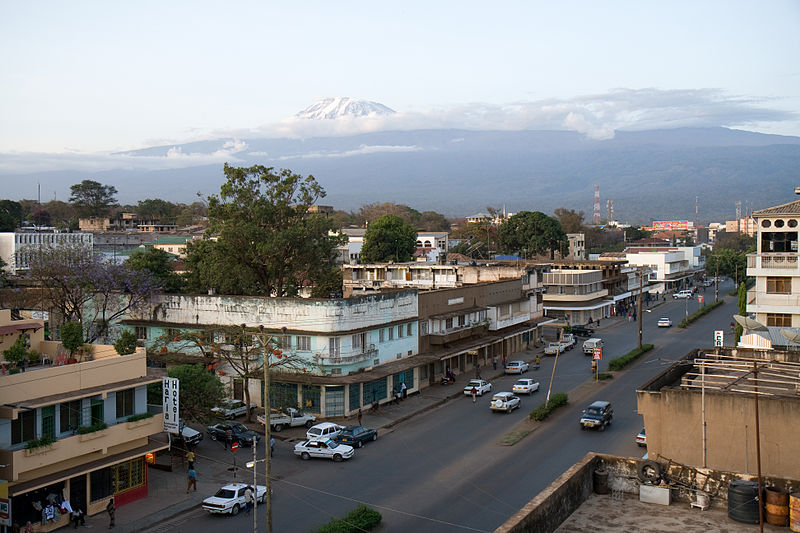
If you are passing through Moshi on your way to Kilimanjaro, you have probably already been told about the coffee farms and the mountain views. Fair enough. But there is something else worth knowing about this town, something that sits at the centre of Chaga food culture and rarely makes it into the standard briefings: a cloudy, mildly fermented banana beer called mbege that the Chaga people have been making and sharing for as long as anyone can remember.
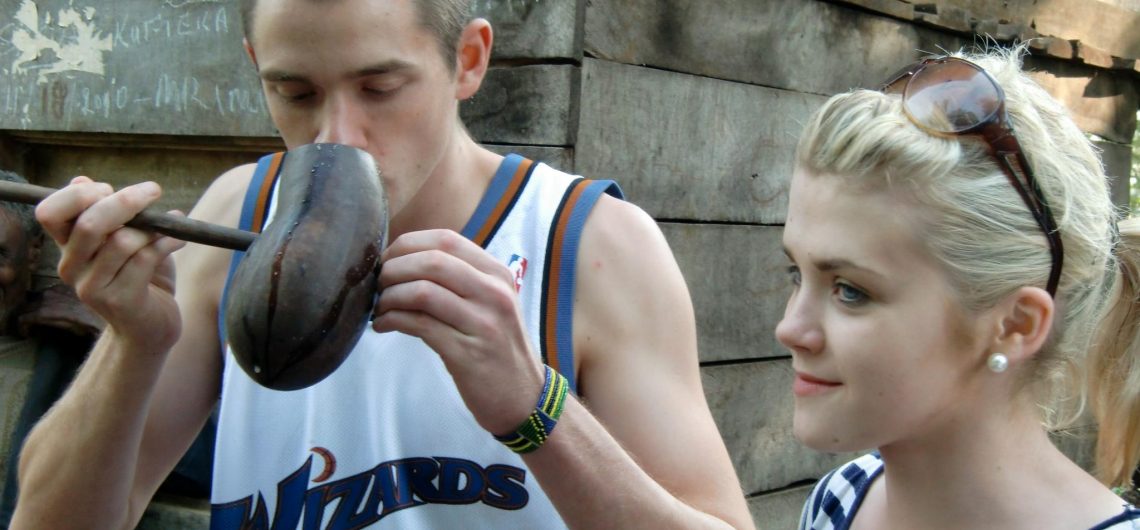
This is not craft beer tourism. Mbege does not come in branded bottles with a backstory on the label. It is served in shared gourds, brewed in backyards, and consumed at funerals, weddings, harvest gatherings, and ordinary Sunday afternoons. Understanding it is a small but genuine window into how the Chaga actually live.
✦ ✦ ✦
What Is Mbege, Exactly?
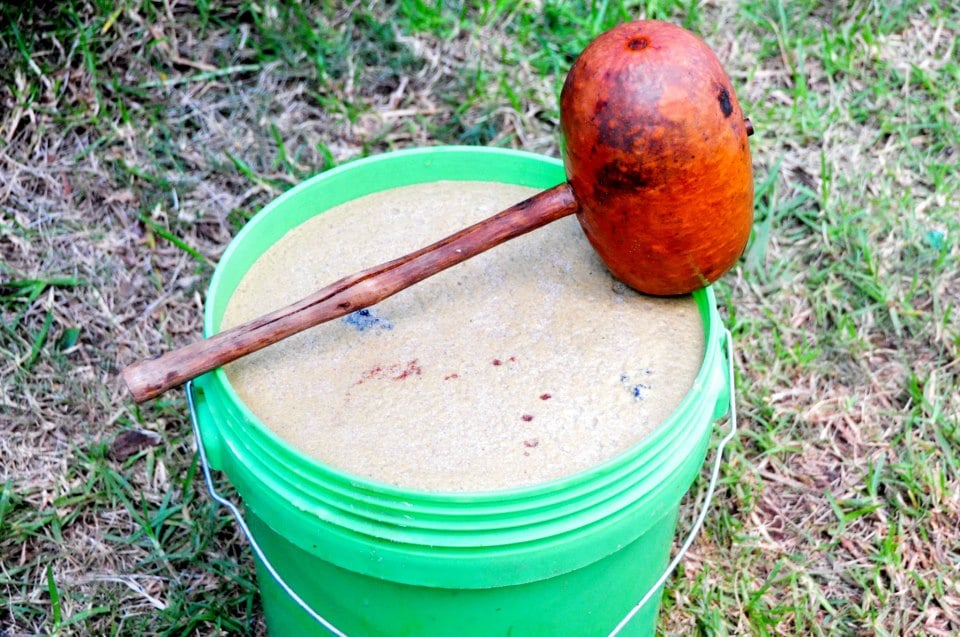
Mbege is a traditional fermented drink made primarily from overripe bananas, specifically the local plantain varieties that grow abundantly on the slopes of Kilimanjaro. The bananas are mashed and fermented together with a grain component, usually a malted flour made from eleusine, which is a type of finger millet known locally as ulezi. That combination of sugars from the banana and the enzymes from the malted grain is what drives the fermentation.
The result is a thick, slightly cloudy liquid with a gentle sour tang and a faint sweetness underneath. The alcohol content sits somewhere between a light beer and a table wine, roughly two to four percent depending on how long it has fermented. It does not taste like commercial beer at all. The closest comparison most travellers reach for is something between a sour smoothie and a very mild kombucha, but that framing does not quite capture it either. Mbege is its own thing.
How It's Made
The traditional process takes two to three days. Overripe bananas are peeled, mashed, and mixed with water. The mashed mixture is strained through a cloth or basket to separate the liquid from the solids. That liquid is then combined with the malted finger millet flour, which has usually been soaked and partially sprouted beforehand. The whole mixture ferments in a large clay pot or wooden container, covered and left in a warm place until it is ready.
The timing matters. Too little fermentation and it is just sweetened banana juice. Too long and it tips into something genuinely sour and sharp. The person doing the brewing knows from smell and taste when it has reached the right point. There is no universal recipe and no standardised version. Every family does it slightly differently.
Local Knowledge Mbege brewed for ceremonies is often made in larger batches and left to ferment longer than the version you might find on a casual afternoon. If someone invites you to mbege at a family gathering, you are getting the real thing.
Mbege and Chaga Food Culture
To understand mbege, you need to understand a little about the Chaga people. The Chaga are the dominant ethnic group around the slopes of Kilimanjaro, one of the most agriculturally productive regions in Tanzania thanks to the rich volcanic soil and reliable rainfall from the mountain. They have a long history of sophisticated farming, including an ancient system of irrigation canals called mifereji/mfongo that still function today.
Bananas, in all their varieties, are central to Chaga food culture. Plantains are eaten as a staple starch, often boiled or roasted. Smaller sweet bananas are eaten as fruit. And the overripe ones that are too soft for cooking, the ones that would otherwise go to waste, become mbege. It is a practical solution that became a cultural institution.
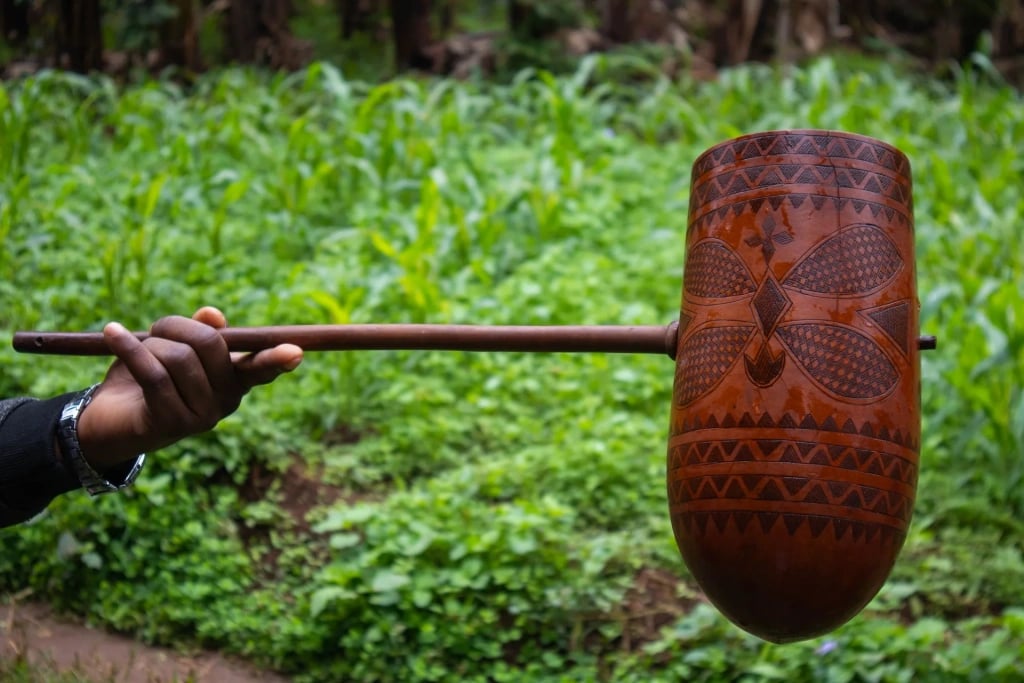
Within Chaga society, mbege is not just a drink. It carries social weight. It is present at rites of passage: the birth of a child, the negotiation of a marriage, the burial of an elder. Sharing a gourd of mbege is a gesture of trust and community. Refusing a sip when it is offered in a ceremonial context is considered rude. Accepting it and drinking communally is a form of participation.
This is why mbege sits squarely within the conversation about traditional Tanzanian drinks as a living cultural practice, not a historical relic.
What to Expect When You Try It
First: it is served at room temperature. Do not expect it to be cold. Cold storage is not part of the tradition and most places that serve it will not refrigerate it.
Second: the texture is not thin like beer. It has some body to it, closer to a loosely strained juice than a filtered drink. You may notice sediment at the bottom of the gourd or cup. That is normal. You can stir it or let it settle, depending on your preference.
Third: it ferments continuously once it is ready. If you are buying from a market vendor, the batch you are drinking from was probably brewed within the last day or two. Fresher batches are milder. Older ones are more sour.
Taste-wise, expect:
A dominant banana note, ripe and slightly tangy
An earthy, grainy undertone from the finger millet
A gentle effervescence, not carbonated in the commercial sense but lively
A mild tartness that builds as the fermentation progresses
Low but present alcohol, enough to notice after a second cup
It is an acquired taste for some, a revelation for others. Most travellers find the first sip surprising but reach for a second anyway.
✦ ✦ ✦
Where to Try Mbege in Moshi
Mbege is not sold in supermarkets or tourist restaurants. You are not going to find it at the coffee shop on the main road. You need to know where to look, and ideally who to ask.
Local Market · Best for authenticity:
Moshi Central Market (Soko Kuu)
This is your most reliable starting point. Inside the main market, particularly toward the produce sections where local vendors sell bananas and grains, you will find women selling mbege from large plastic containers or clay pots, usually in the morning and early afternoon. Bring your own cup or ask for a disposable one. Prices are minimal, often 500 to 1,000 Tanzanian shillings for a cup. Nobody is going to charge you tourist prices here.
Cultural Experience · Best for context
Chaga Village Homestays and Farm Tours
A number of community-based tourism operators around Moshi and the lower slopes of Kilimanjaro offer half-day or full-day village experiences that include mbege as part of the visit. Operators like Moshi-based guides working out of the Marangu or Materuni village circuits often include a stop at a family compound where mbege is brewed and shared. This is the format that gives you the most context: you see where it is made, who makes it, and what role it plays in the household. Ask your guesthouse or hotel to connect you with a local guide rather than booking a generic cultural tour through a large operator.
Kilimanjaro Foothills · Best for the full picture
Materuni Waterfall and Coffee Tour
The Materuni village tour is one of the most popular half-day excursions from Moshi and with good reason. The route combines a coffee farm walk, a waterfall swim, and a traditional Chaga lunch. Mbege is typically part of the experience, served after the meal. The setting is a working family farm about 1,400 metres up the mountain, surrounded by banana trees and coffee plants. It puts the drink in its natural landscape in a way that a market cup simply cannot. The tour costs roughly $45 to $60 USD per person and can be arranged directly in Moshi town for a better price than booking through a hotel.
Local Bars · Best for a casual drink
Pombe Bars in the Residential Neighbourhoods
Pombe is the Swahili word for local brew, and small pombe bars are scattered through the residential streets of Moshi, particularly in neighbourhoods like Rau and Karanga. These are not tourist establishments. They are small, often informal spots where locals go to drink after work or on weekends. Mbege is sometimes available alongside other local brews like ulanzi (palm wine from bamboo). Walking into one of these places as a visitor requires a bit of confidence and ideally a local guide or contact who can introduce you. The reception is usually warm once the initial curiosity settles.
Practical Notes Before You Go
Mbege is mildly alcoholic. Two cups in the midday heat at altitude is enough to feel it.
If you have a sensitive stomach, start with a small amount. The fermentation is live and unfiltered.
The drink does not keep well once opened or transferred. Drink it fresh and local.
Do not offer to photograph the brewing process or the people serving without asking first. It is someone's home or livelihood, not a display.
If someone offers you mbege in a social setting, accepting is the polite move. Drinking a small amount is perfectly fine even if you do not want a full cup.
Mbege in the Wider Landscape of Traditional Tanzanian Drinks
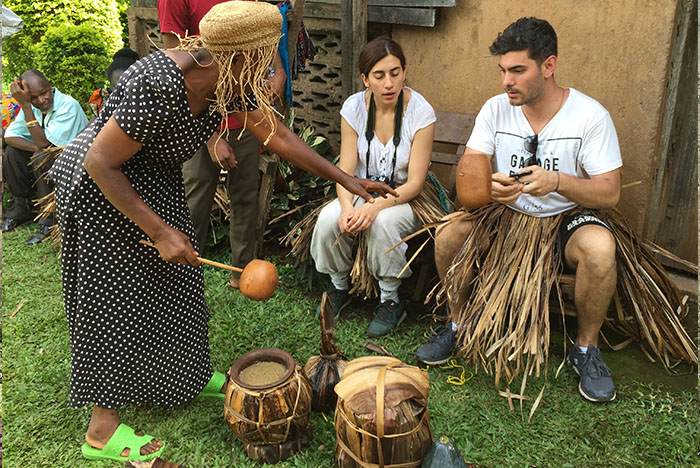
Tanzania has a broad and largely unexplored tradition of local fermented drinks. Ulanzi, made from bamboo shoots, is associated with the Hehe and other central highland groups. Togwa is a fermented porridge drink, close to a thin gruel, that is common across the country. Mnazi is the coastal coconut palm wine that you will find in Zanzibar and along the Swahili coast. Each of these traditional Tanzanian drinks is tied to a specific geography and a specific culture.
Mbege belongs to Kilimanjaro the way mnazi belongs to Zanzibar. It is not transferable. You cannot replicate the experience in Dar es Salaam or Stone Town. The drink is connected to the altitude, the soil, the banana varieties that grow on the mountain, and the community that has been making it across generations. That specificity is the point.
For travellers who move through Tanzania collecting experiences, mbege offers something that a coffee tasting or a sunset hike cannot. It asks you to sit down, share something with strangers, and slow down for long enough to actually taste where you are.
✦ ✦ ✦
A Final Thought
Most people who visit Moshi are thinking about the mountain. That is understandable. Kilimanjaro is right there on the horizon, unavoidable and genuinely impressive. But Moshi the town, the market, the farms, the neighbourhood bars, the households where someone woke up two days ago and started mashing bananas for a batch of mbege, that version of the place is equally worth your attention.
The Chaga have been farming this mountain and feeding themselves and their communities for centuries. Mbege is one of the clearest expressions of that relationship between people, land, and tradition. You do not need to love the taste to appreciate what it represents. But there is a reasonable chance you will love it anyway.
WEARETANZANIA.COM | This article is part of our Northern Tanzania cultural series. All pricing information is approximate and subject to change. For the most current tour costs and availability, contact a Moshi-based guide directly.