)
Maasai Eco Boma Lodge
A night inside a Maasai community, and the imprint it leaves on your family

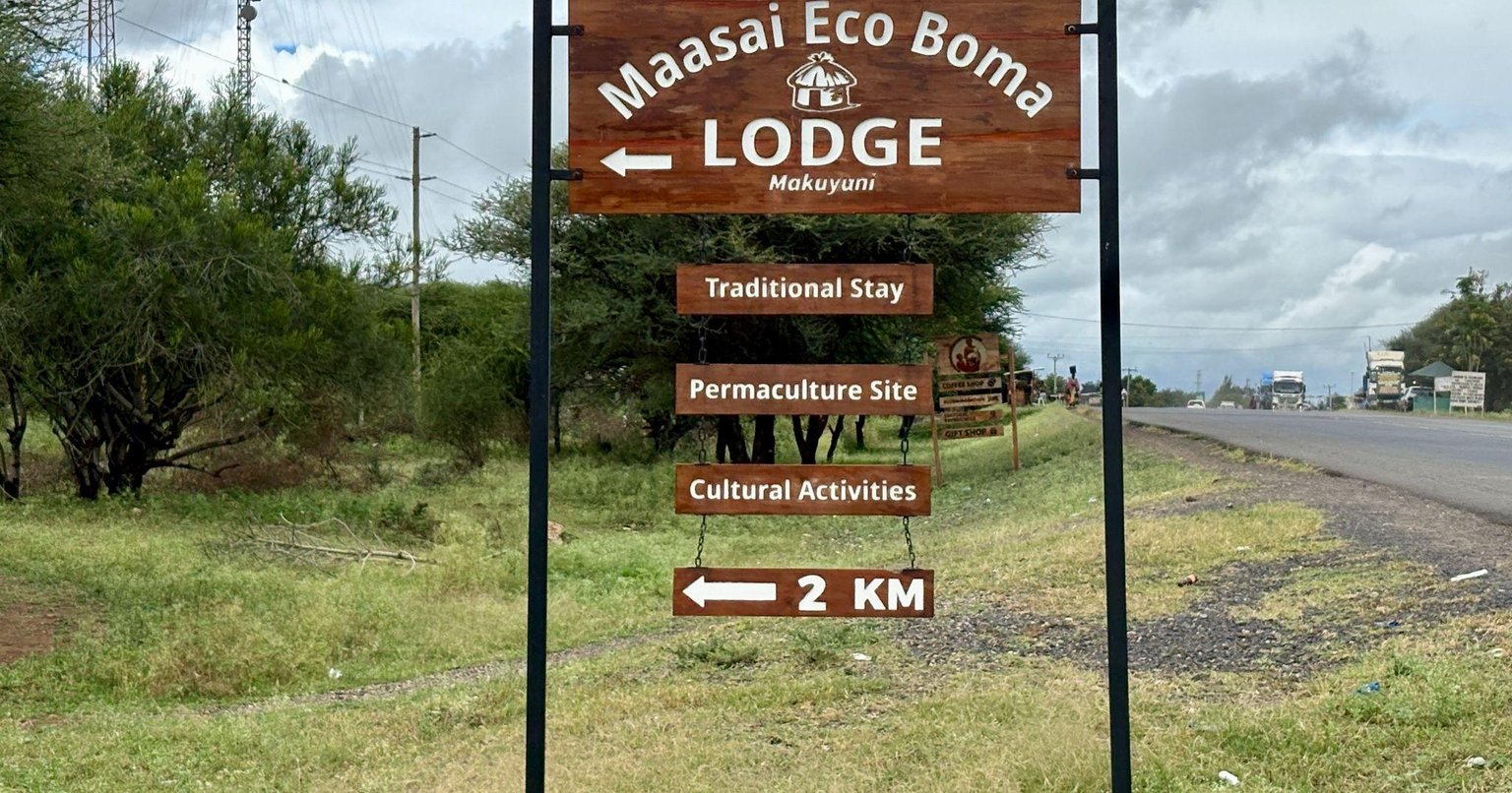
Makuyuni, Tarangire/Lake Manyara Wildlife Corridor, Tanzania
We were not sure what to expect. Cultural tourism in Tanzania can go either way: it can feel staged, transactional, and vaguely uncomfortable. Or it can be the thing you talk about for months afterwards. Maasai Eco Boma Lodge was the second thing.
In this article:
We arrived after two nights at Tarangire Safari Lodge, a family of five: my husband, myself, our five-year-old, our two-and-a-half-year-old, and a grandmother. The welcome was immediate. Singing, jumping, dancing at the gate. My first instinct was braced scepticism. But within ten minutes that had gone completely.
The difference is this: from the moment we arrived, we were told clearly that our stay supports the entire community, that everything is shared, and that we are genuinely welcome to go anywhere and photograph anything because everyone benefits equally. That clarity changes how you move through a place. It removes the awkwardness of the tourist gaze. You are not watching; you are participating.
What is Maasai Eco Boma Lodge?
Maasai Eco Boma Lodge is a purpose-built community lodge in Makuyuni, in the wildlife corridor between Tarangire and Lake Manyara National Parks. It was built in 2020 and is owned and operated by the Maasai people of the area. 99% of the staff, including the manager are Maasai.
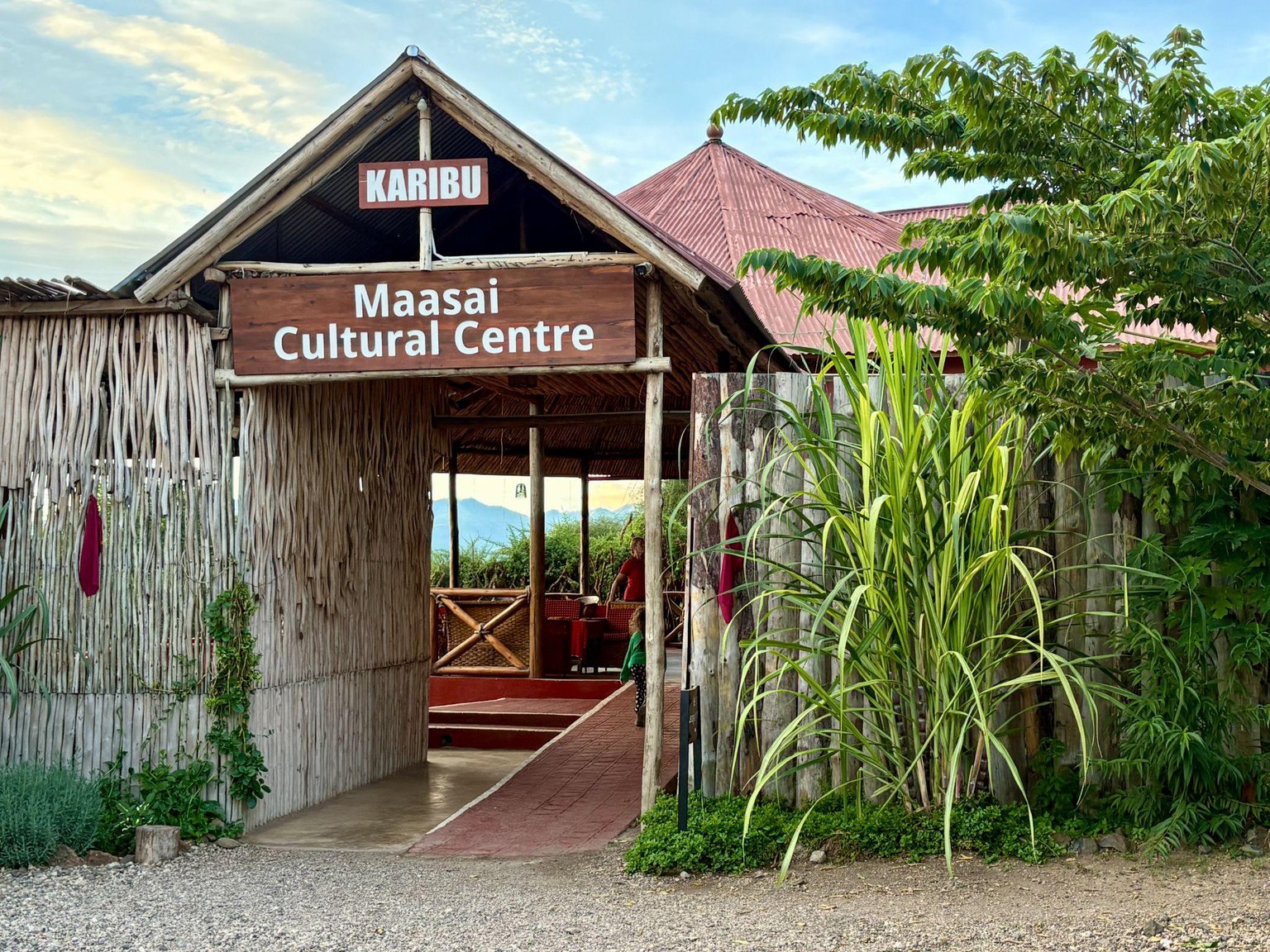
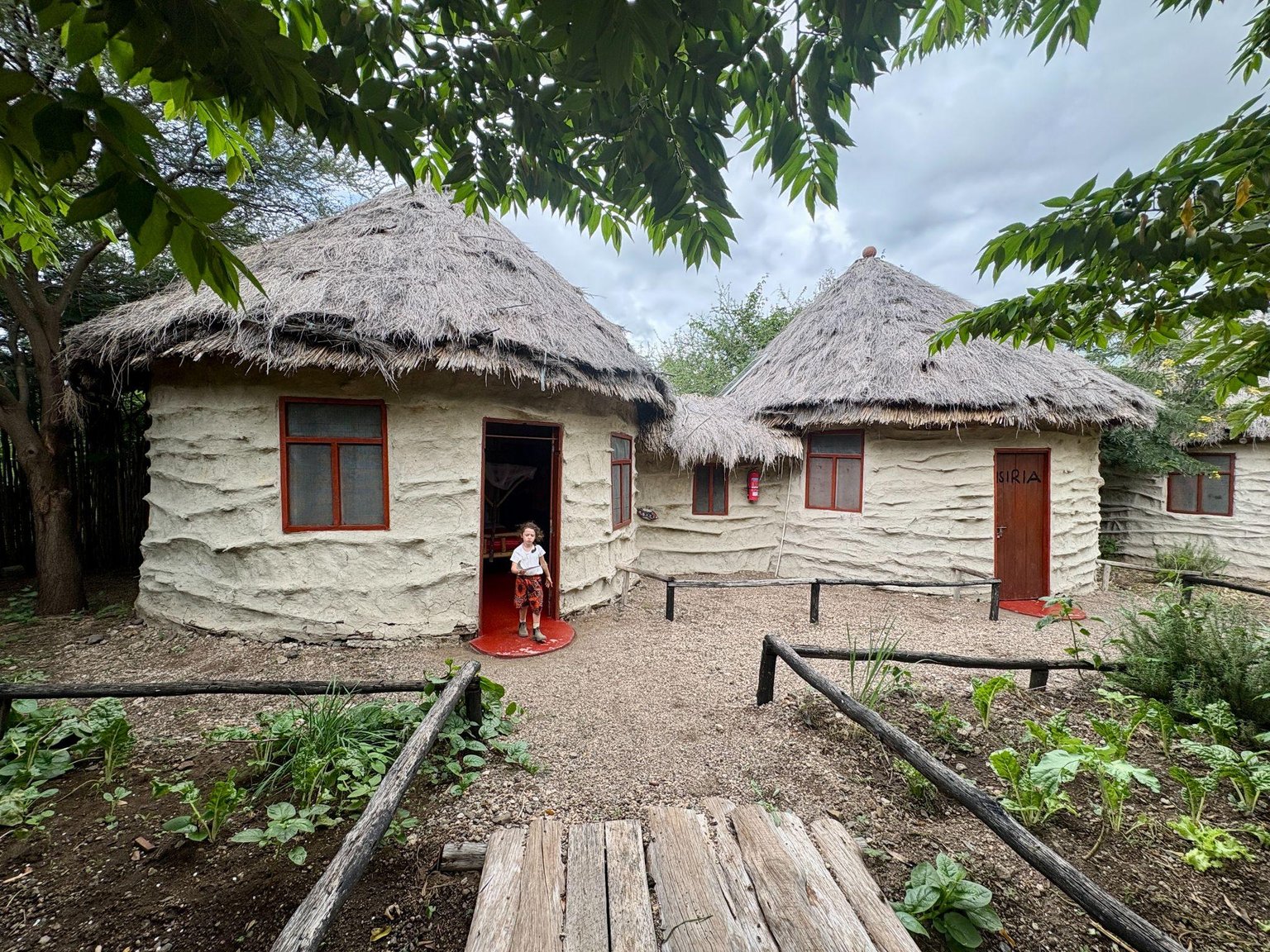
It is not a game lodge. There is no pool, no infinity terrace, no concierge. What it offers instead is access to a living Maasai community: the school, the elders, the traditional medicine practitioner, the cattle, the kitchen fire, the evening stories. The proceeds from your stay go directly back into the community. Thirty percent funds the school education programme, twenty-nine percent goes to the village, and twenty-three percent covers activities and meals.
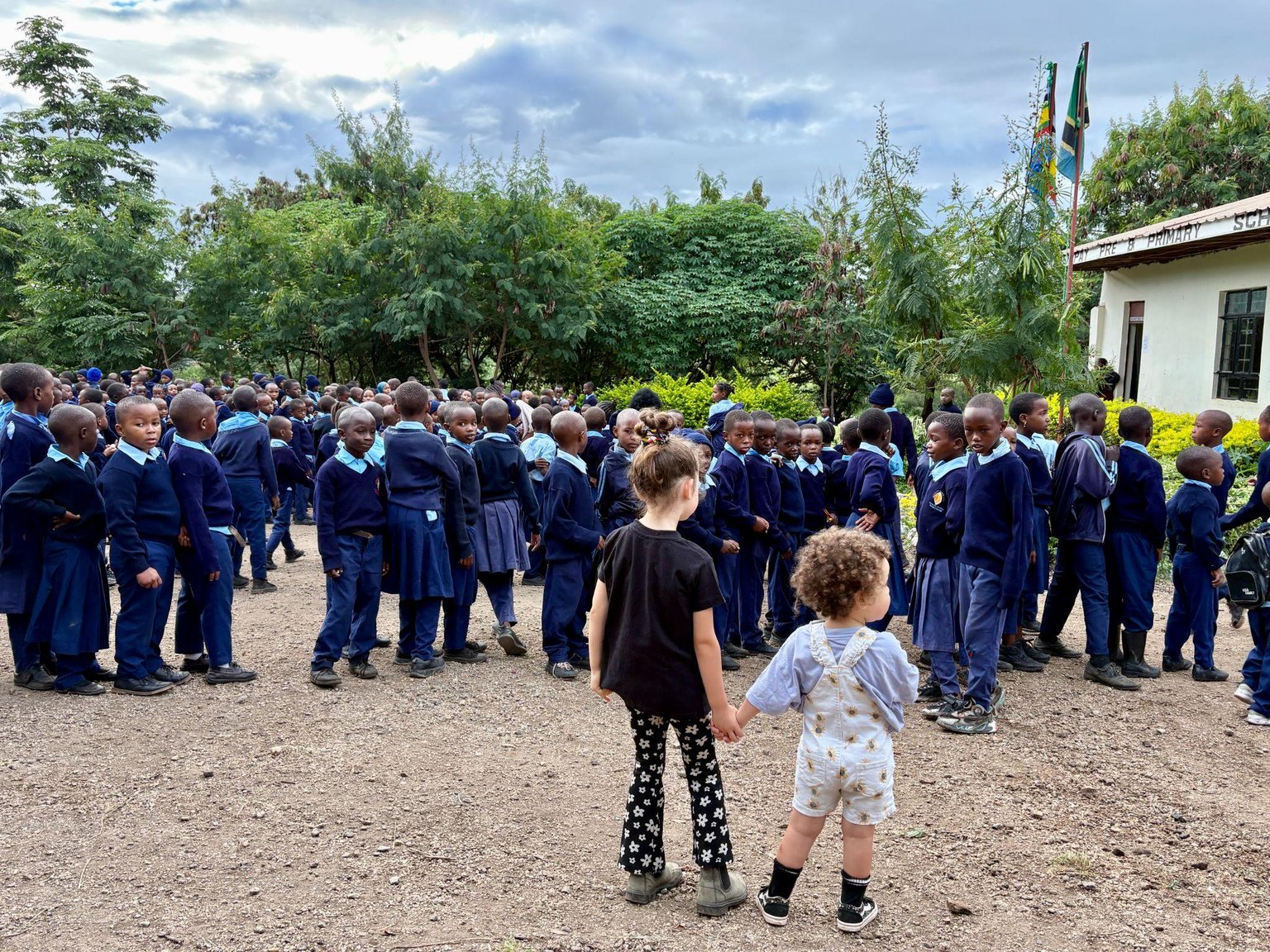
The school, Nashipay Pre and Primary Eco School, is the lodge's largest beneficiary. More than 500 students are enrolled, and 97 of them attend for free because their families live below the Maasai poverty line, which is defined as owning fewer than nine goats and five cows. That number stays with you.
At a Glance
| Feature | Details |
|---|---|
| Location | Makuyuni, Tarangire/Lake Manyara wildlife corridor |
| Built | 2020. Owned and operated by the Maasai community of Makuyuni. |
| Staff | 99% Maasai |
| School | Nashipay Pre & Primary Eco School. 97 students attend free |
| Proceeds | 30% education, 29% village, 23% activities and meals, 18% government tax |
| Accommodation | Traditional Maasai huts, en-suite, electricity, mosquito nets |
| Hot water | Available between 18:00 and 21:00 |
| Wi-Fi | Available on site |
| Meals | All included. Served in the outdoor dining area |
| Pricing | On request via maasaiecoboma.com |
The Huts
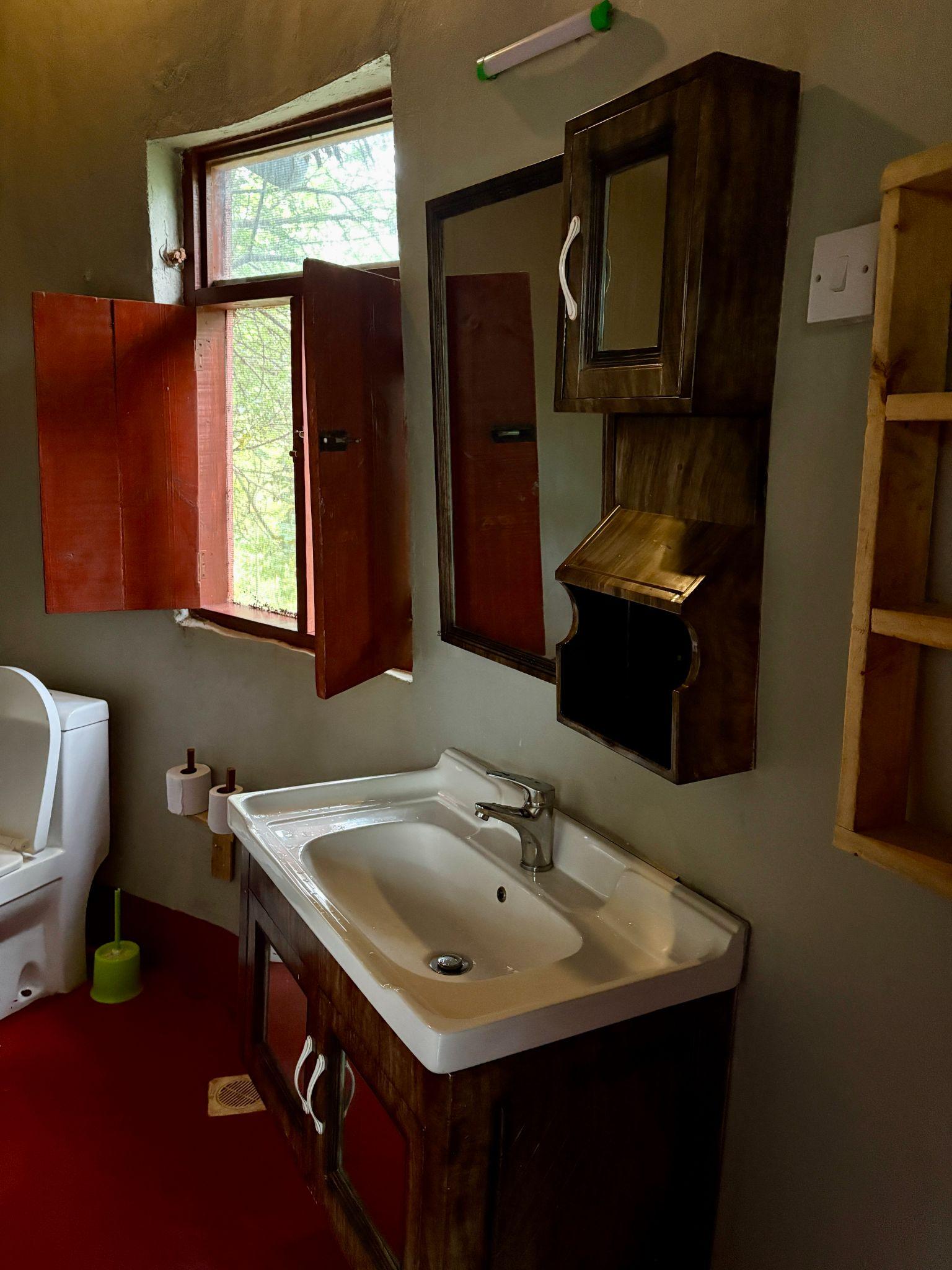
We had the family room: two connected huts with a narrow passage between them just wide enough for a suitcase. Three single beds in one hut, a double in the other. The huts are traditionally built with surprisingly generous ceiling height, thick walls, and the smell of earth and wood. Each has electricity and light points, a mosquito net over the bed, and an en-suite bathroom with shower.
Hot water runs between 18:00 and 21:00, when the boiler is switched on. Outside those hours, the water is cold. This is worth knowing rather than discovering at 21:15. We showered the kids at 18:30 and it worked perfectly. It also means the timing organises your evening for you, which with small children is not a bad thing.
The huts are arranged around a central courtyard, with the restaurant and communal area in the middle. Distances are short. A basic baby monitor covers the space without issue. Our youngest woke once during the evening performance, which involves enthusiastic singing at considerable volume, and one of us went back.
The Activities
You choose your activities when you arrive. With our five year old, we went for beadwork with the Maasai women, which was fun. As a family we visited the traditional medicine practitioner, and the evening cattle activities I did with our oldest and with grandma, while dad put the two year old to bed.
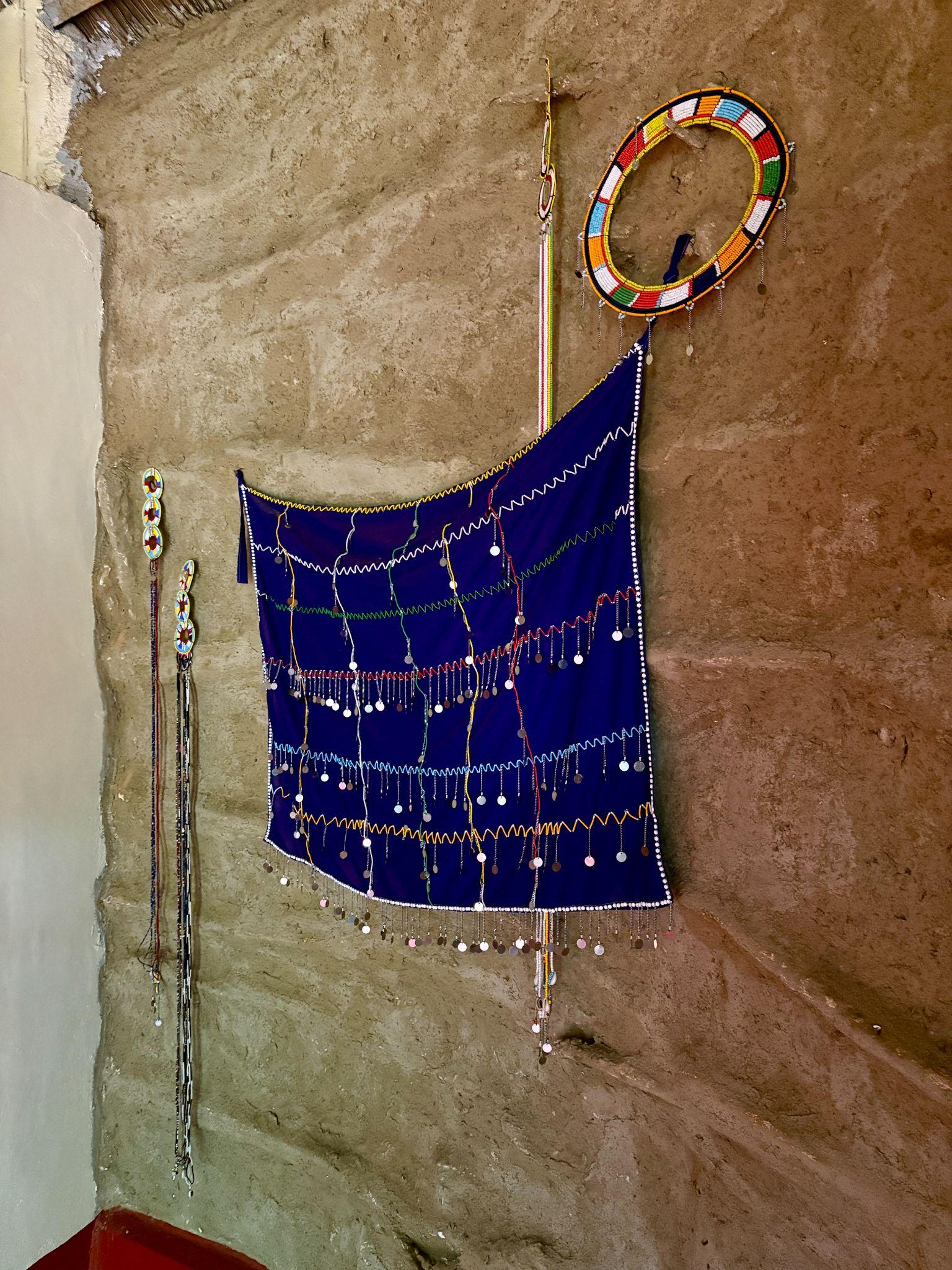
The beadwork session meant sitting with a group of women and making our own bracelets. Our five-year-old dropped half her beads in the sand. Nobody minded. The women were patient and completely unselfconscious about having a small child doing it alongside them, picking up beads and starting again without any fuss.
The visit to the traditional medicine practitioner was something we had not expected to find interesting and did. His knowledge comes from his father, who learned from his grandfather. Plants, bark, roots, leaves. Treatments for malaria, infections, broken bones, all using materials that grow within walking distance. A splint made from tree bark. Honey for wounds. Nutmeg for nausea. It is worth going in with an open mind.
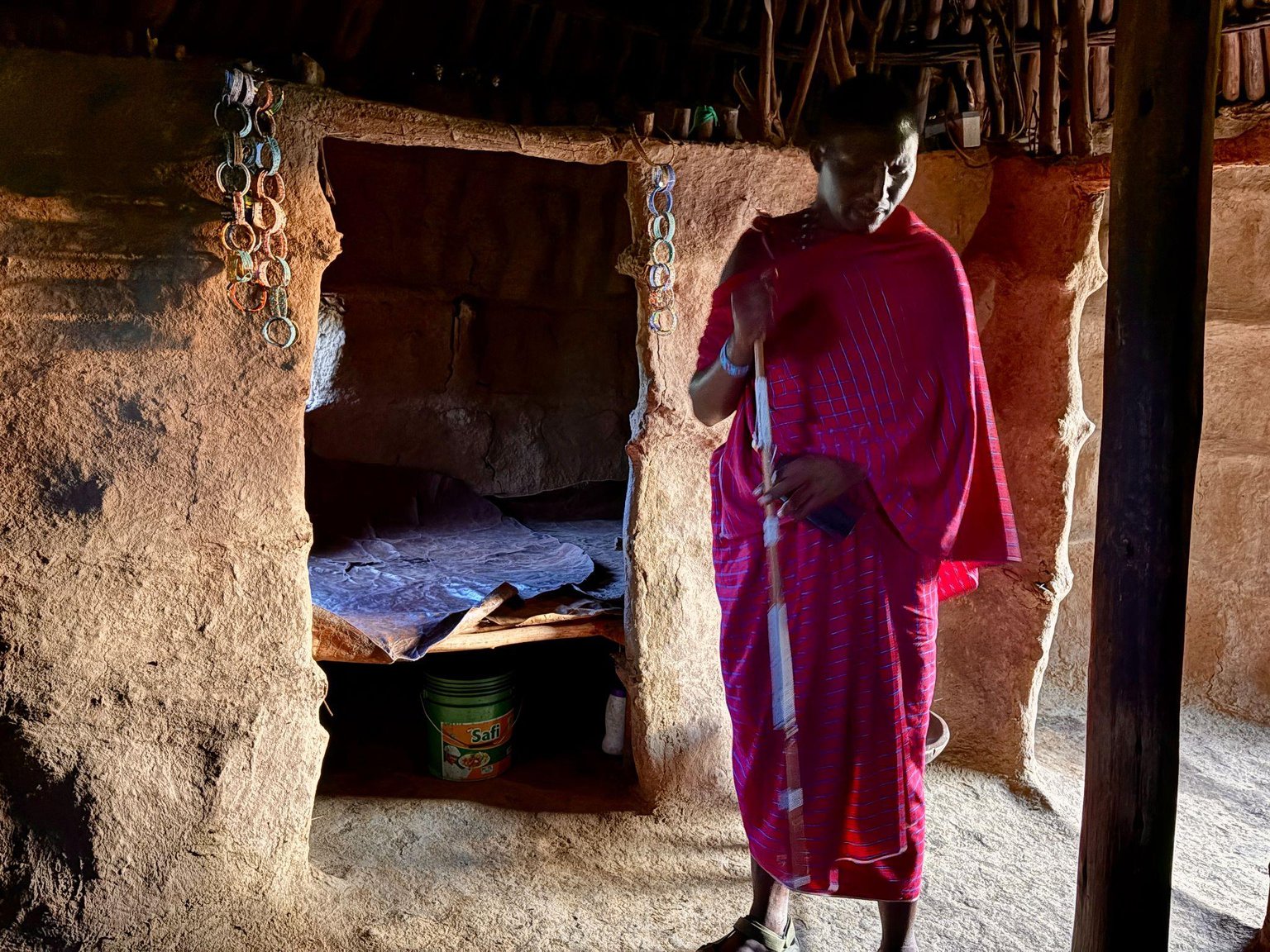
At 18:00 we could experience the traditional maasai house. Our five-year-old held a two-hour-old goat. Its mother waited at a short distance and the reunion afterwards was enthusiastic on both sides. Our youngest watched. Then we saw the cow milking, and the five-year-old tried her hand.
In the morning we walked to the school at 07:30 to catch the start of the day. More than 500 students, a modest building, a wonderful morning routine to watch and participate in and an ehtousiastic. It is two minutes from the huts on foot.
The Campfire Evening
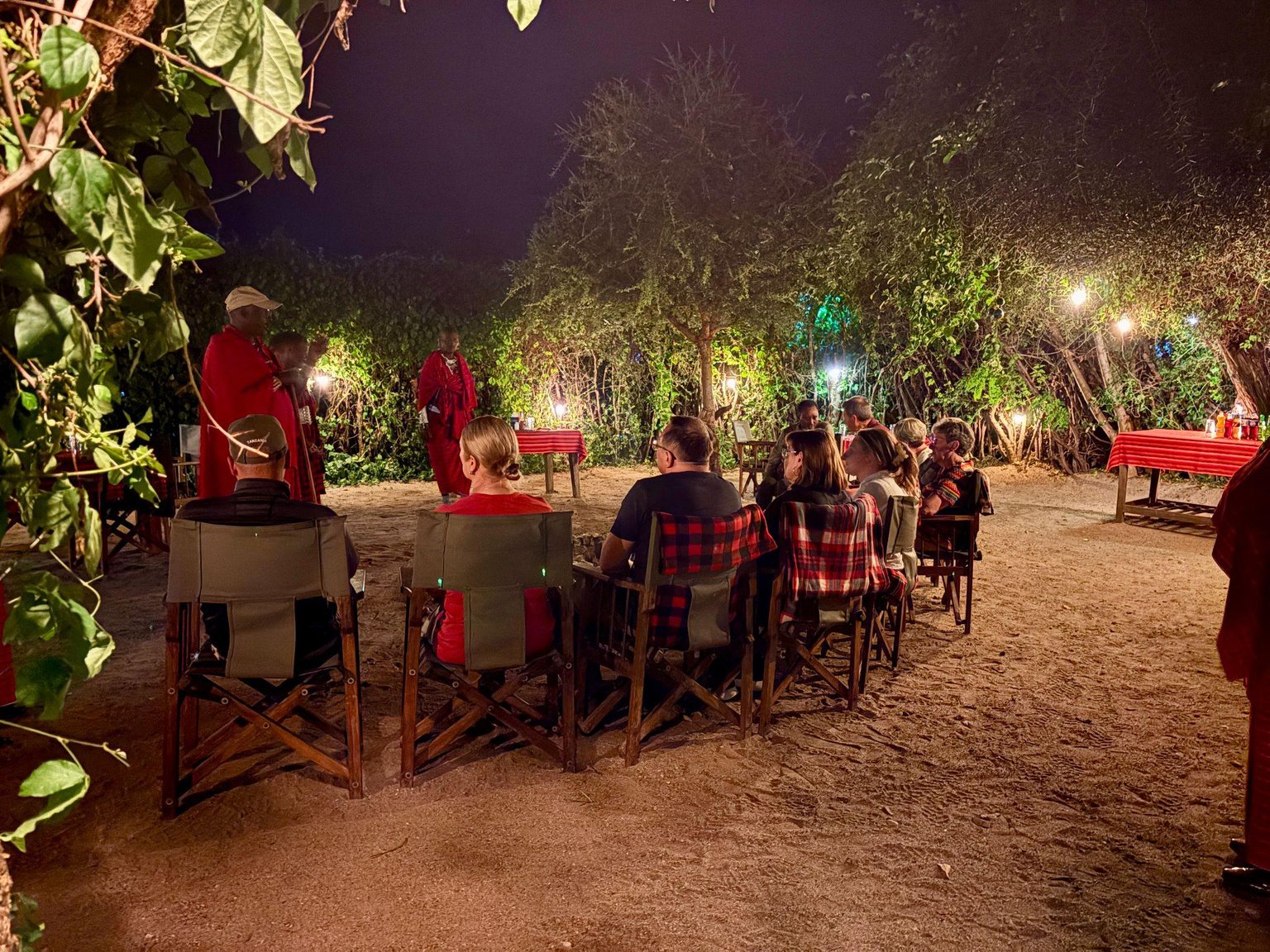
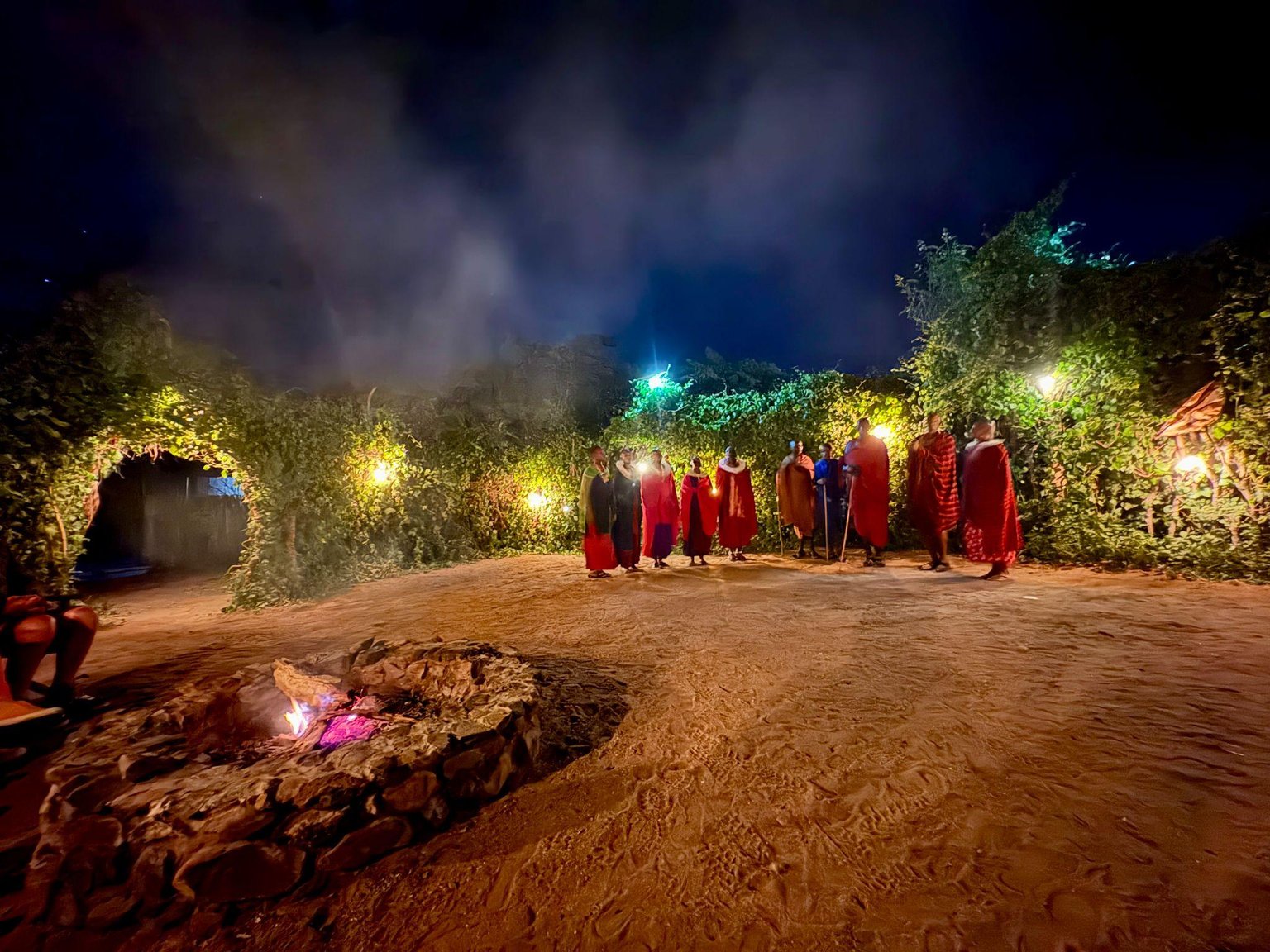
After dinner, the Maasai performed at the campfire. Singing, the jumping dance, stories. Our children were in bed by then and we were there with their grandmother. It moved us more than we expected.
There is something about watching people perform something that is genuinely theirs, not for the camera but because it is how they mark the end of a day, that lands differently than a show.
Over dinner and around the fire, we learned things that stayed with us. The Maasai social hierarchy runs on age, not on wealth or status. An elder you have never met can ask you to fetch a cow from the other side of a mountain and you go, because their years mean they have something to teach you.
There is no lying and no stealing in the community, not because of law but because the consequences are social and permanent. If something goes missing, the community waits weeks for the person to come forward voluntarily. If they do not, everyone gathers and the person who accuses and the accused one drink milk with blood. The one that lies will get curses. No one wants to get there so Maasai live their lives honestly.
The Food
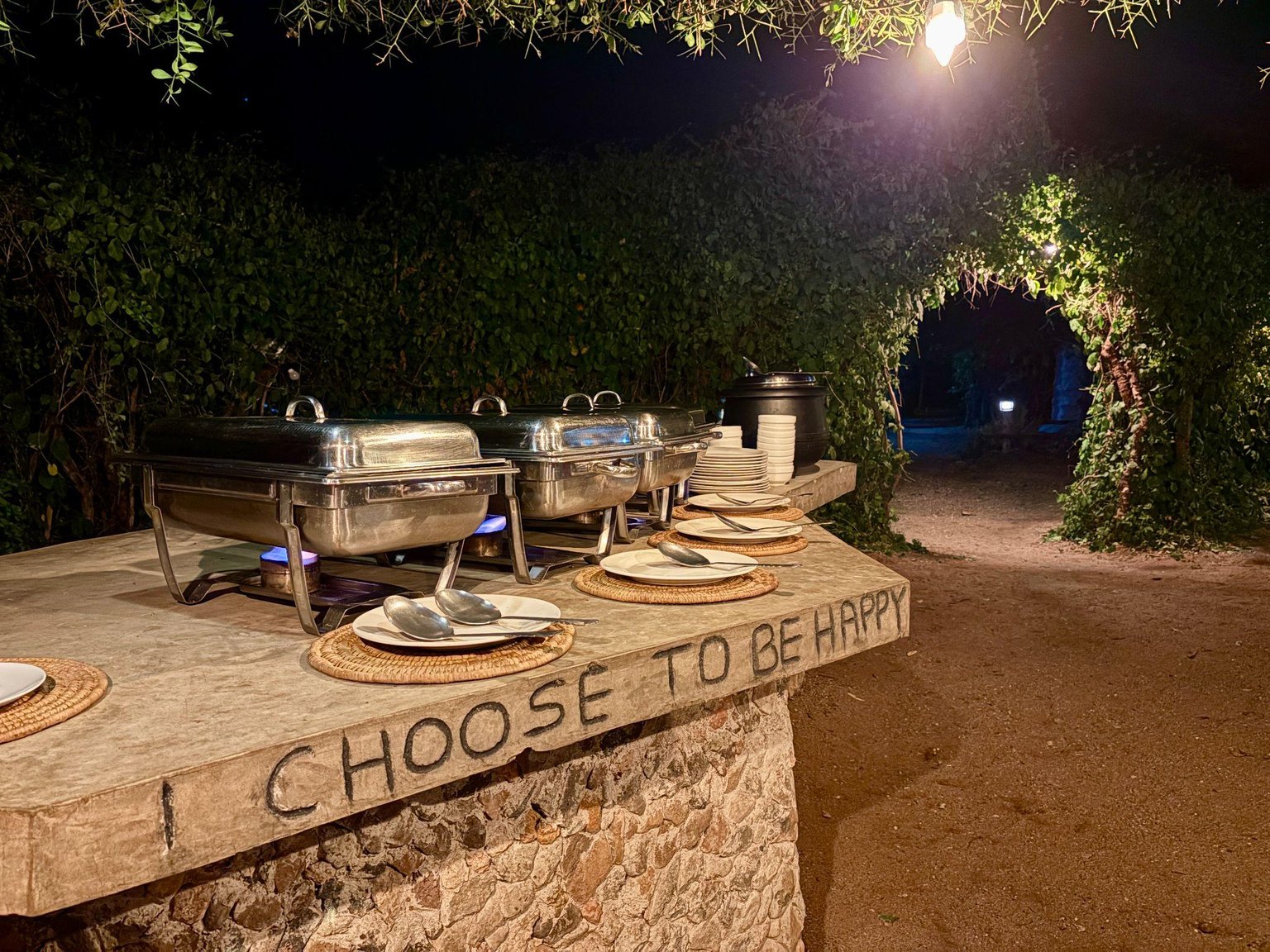
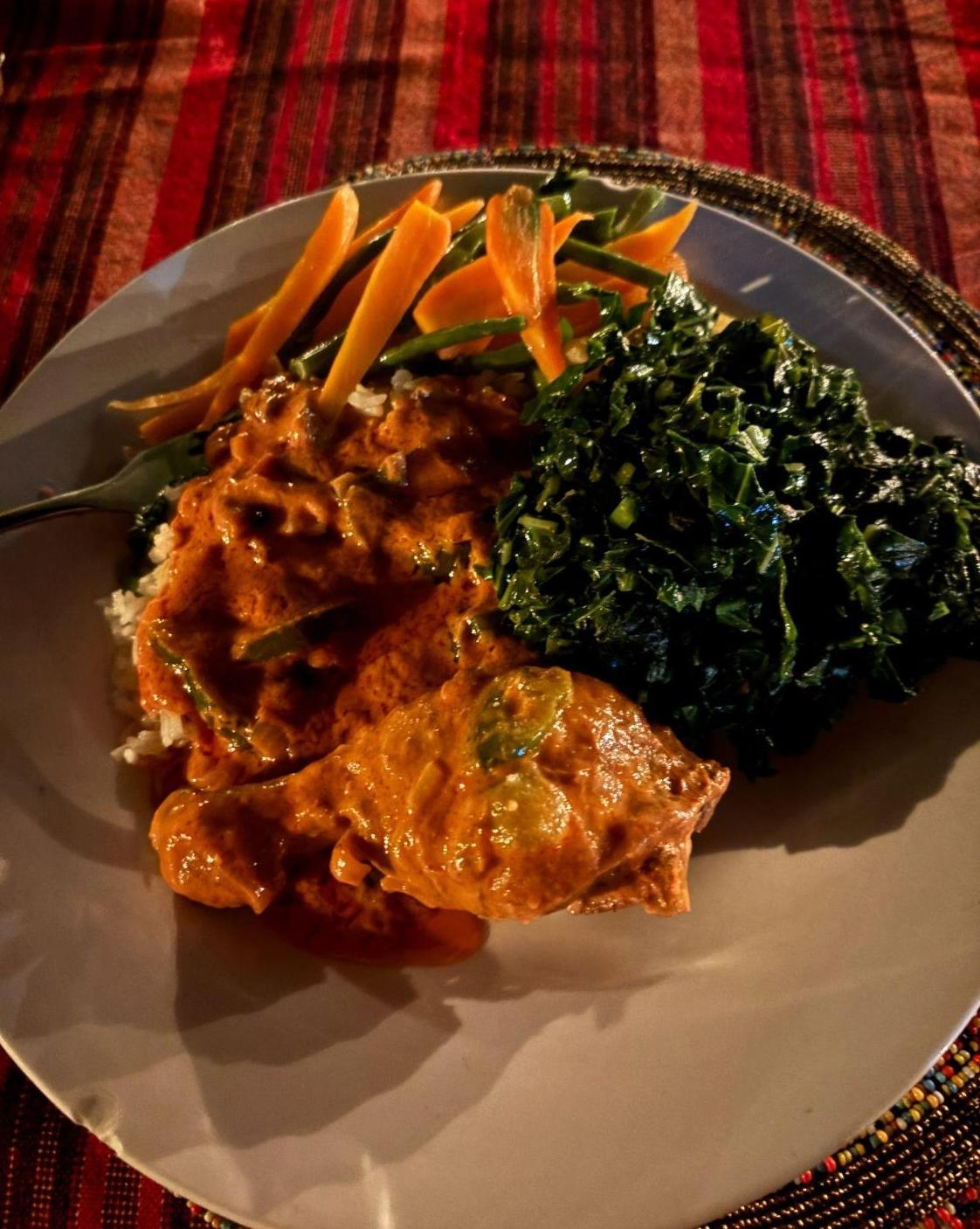
Lunch on arrival included a hibiscus welcome drink the team called goat blood, delivered with a straight face and a smile. The food throughout was generous and well-prepared. Breakfast offered toast, pancakes, beans in tomato sauce, and more. Lunch and dinner were full meals served in the open-air dining areas.
Eating plant-based at Maasai Eco Boma Lodge
We eat plant-based. The options were present but limited compared to Tarangire Safari Lodge. There was no dedicated protein replacement such as beans or legumes at every meal. The kitchen was willing and accommodating, but if plant-based eating is important to your trip, it is worth mentioning at booking so the team can prepare. Breakfast was the easiest meal by a distance.
The kids ate their leftover lunch reheated in the evening, which the kitchen handled without any fuss. That kind of flexibility matters when you are travelling with young kids.
Our Schedule
For families wondering how a day actually runs here with young children: we arrived early afternoon and had lunch on arrival. In the afternoon we did the beadwork activity and the traditional medicine walk.
Both children had early dinner at 17:30 and a shower at 17:45 (they were willing to heat the boiler a bit earlier). The youngest went to sleep early while the five-year-old joined the 18:00 cattle activity, holding the baby goat and watching the milking. The oldest one went to bed before the campfire evening began. The adults stayed for the performance and dinner at 19:30.
The next morning we gave the children a light breakfast at 07:00 and walked to the school at 07:30 to catch the start of the day. That rhythm works well: the main activities land in the late afternoon when the heat is lower, the children are tired in a good way by evening, and the adults get the campfire moments to themselves.
What Works, and What to Know
What Works
The transparency about where your money goes makes the whole experience feel like something other than tourism. The activities are genuinely participatory, not performative. The staff are warm and entirely without awkwardness about having guests in their space. The school visit is one of the better things you can do with children on the northern circuit. The campfire evening is better than you expect. The family hut configuration works well for a group of five. The location in the wildlife corridor means the mornings sound like Africa.
What to Know Before You Book
Hot water is available between 18:00 and 21:00, but there was some flexibility for us. The evening performance is loud and enthusiastic, so light sleepers or very young children may wake. There is no pool. The shop prices are tourist-facing, which is honest and understandable but worth knowing. There are small donation boxes placed around the property at various points, and at one activity a contribution was mentioned. You can ignore these entirely without any awkwardness; nobody follows up. But if you prefer a cleaner transaction, know that they are there.
Book directly with the lodge and your money goes straight to the community.
Visit the official Maasai Eco Boma Lodge website
Would We Go Back?
Yes. But more than that, we would recommend it as the kind of stop that changes the shape of a safari trip. Most safaris are about animals. This one is about people, and done this well, that is at least as valuable.
Our five-year-old still talks about the baby goat. Our youngest was still singing the typiscal Maasai song in the car on the way home. Their grandmother said it was a very interesting experience. We came in slightly guarded and left with something we did not expect to take home.