)
Western Corridor & Grumeti
The Underrated Serengeti


The Western Corridor is the part of the Serengeti that the migration passes through between May and July on its way north - and the part that most safari itineraries skip entirely. It has giant Nile crocodiles, river crossings with half the vehicle pressure of the Mara, some of the best private concession camps on the ecosystem, and resident wildlife that performs year-round. This guide covers when to come, what to expect, and how it compares to the rest of the Serengeti.
Where the Western Corridor Actually Is
The Serengeti is often discussed as if it were one place. It is not. It is a 14,763 square kilometre ecosystem with meaningfully different geography, vegetation, and wildlife depending on where you are. The Western Corridor is the arm of the park that extends west toward Lake Victoria - a long, narrow band running roughly from Seronera in the south toward the Grumeti River and beyond.
It is separated from the Northern Serengeti (Kogatende and Lamai) by both geography and by the migration calendar. Most safari operators route clients through the Seronera area or the north. The Western Corridor gets a fraction of that traffic. This is its defining quality - and, depending on your priorities, either its main attraction or the reason your operator skipped it.
The Grumeti River runs east to west through the corridor. This is the axis around which everything in this sector turns. The river is a permanent water source, which means wildlife concentrates here throughout the year. In June, when the migration arrives, it becomes the staging ground for some of the most dramatic predator-prey interactions on the planet.
Geography note: The Western Corridor is not accessible from Arusha by road in a practical sense. Most visitors fly in - either directly to Grumeti Airstrip or via Seronera - and base themselves at a camp in the sector. Factor this into your planning..
The Migration Window: May to July
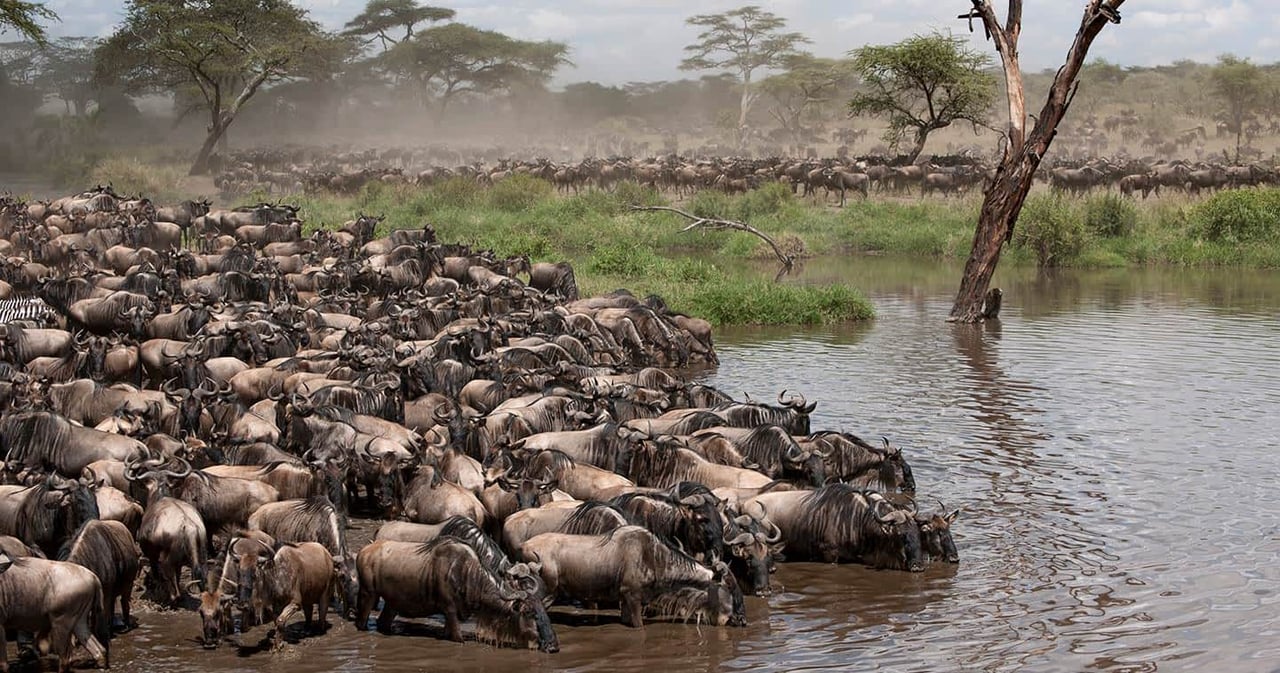
The Great Migration does not move on a schedule. It moves with the rain, following the short grass that grows in a rainstorm's wake. The broad pattern holds most years: the herds calve in the southern Serengeti and Ndutu between January and March, push through the central Serengeti in April, enter the Western Corridor in May, and cross the Grumeti River in June before heading north toward the Mara by July.
| Month | Migration Status | Conditions | Value |
|---|---|---|---|
| May | Herds entering the corridor | Tail end of long rains. Green, lush, atmospheric. | High - low season prices, excellent wildlife |
| June | Peak. Grumeti crossings. | Dry season beginning. Best game-viewing conditions. | Highest - this is the window |
| July | Herds moving north | Dry. Some herds linger; most heading to Kogatende. | Good - crossings tailing off, wildlife still strong |
| Aug–Oct | Migration has moved north | Dry season. Resident game year-round. | Quieter - Northern Serengeti is the focus |
| Nov–Apr | Migration absent | Green season. Short and long rains. | Low season - resident wildlife and solitude |
May deserves more attention than it gets. The long rains are ending, the bush is impossibly green, the air is clear after the dust of the dry season, and the camp rates are at their lowest point of the year. The migration is arriving. Wildlife is abundant. The only thing missing is other safari vehicles - which, depending on your tolerance for crowds at the Mara in August, sounds like a selling point rather than a drawback.
June in the Western Corridor is the Serengeti before it got famous. The crossings happen. The crocodiles are there. The vehicles are not.
The Grumeti River Crossing
There are two major river crossings in the Great Migration: the Grumeti and the Mara. The Mara gets the coverage, the photographs, the documentaries. The Grumeti crossing is what the Mara was before the operators found it.
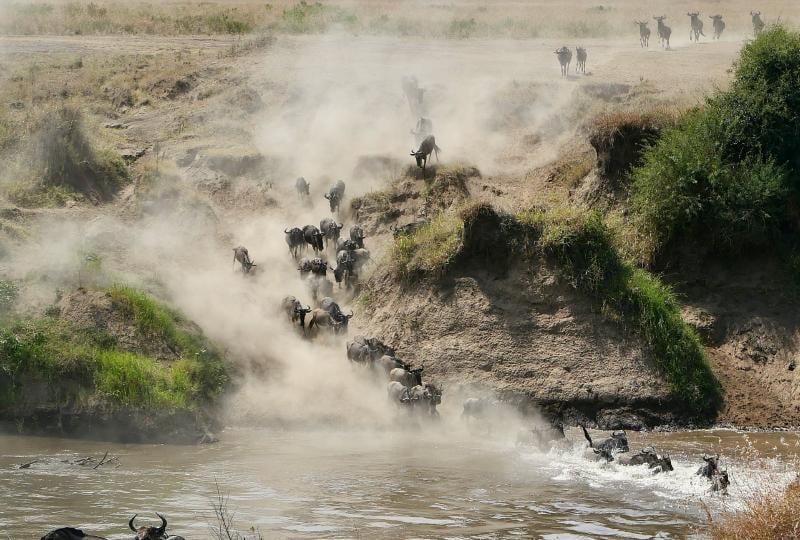
The mechanics are the same. The wildebeest and zebra reach the river, bunch up on the southern bank in their thousands, produce the collective anxiety that characterises every crossing - the movement toward the water, the retreat, the hesitation that can last hours - and eventually go. When they go, they go in a flood. The crocodiles move.
The crocodiles
The Grumeti has some of the largest Nile crocodiles on the continent. They are not here by accident - they are permanent residents of a river that receives a seasonal protein delivery in the form of two million wildebeest. The crocodiles in the Grumeti are old and enormous because they have been eating well for a very long time. Sizes of five metres and above are not unusual. This is genuinely one of the great wildlife spectacles in Africa, independent of the migration itself.
Outside of migration season, the crocodiles are still there. They move less and eat less, but the pools along the Grumeti River hold concentrations of crocs that most wildlife parks can't match. A morning game drive along the river in October is not the same as a June crossing, but it is not nothing either.
The vehicle situation
At the Mara River crossings in August and September, you will share the experience with anywhere from thirty to sixty safari vehicles. They arrive before dawn and hold position. The crossing, when it happens, is watched by a crowd. This is a documented problem - the vehicles stress the animals, alter crossing decisions, and turn a wild event into something that resembles a spectator sport.
At the Grumeti in June, you may share a crossing with six vehicles. Possibly fewer. The private concessions that operate here have protocols about vehicle numbers at sightings. The experience is categorically different - not because the event is less dramatic, but because the space around it is preserved.
Crossing timing: Crossings are not predictable. You position near the crossing points and you wait. A good guide reads the herd's movement and behaviour. This is a lesson in patience and in trusting your guide's read of the situation over your itinerary.
Wildlife Beyond the Migration
The Western Corridor is often discussed as if its wildlife interest is entirely dependent on the migration. This is wrong. The Grumeti River system supports year-round wildlife concentrations that compare favourably with many of Africa's top reserves.
Lion— resident prides throughout the corridor, well-habituated, excellent year-round
Leopard— the riverine forest along the Grumeti holds good numbers; river crossings for sightings
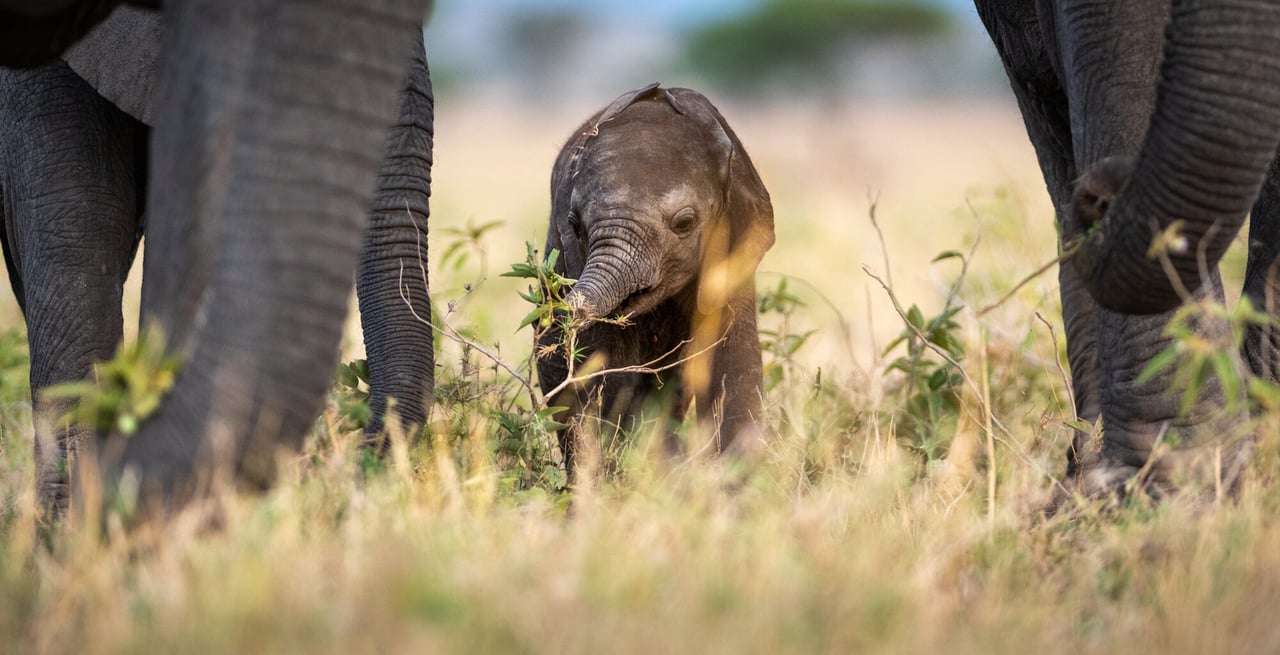
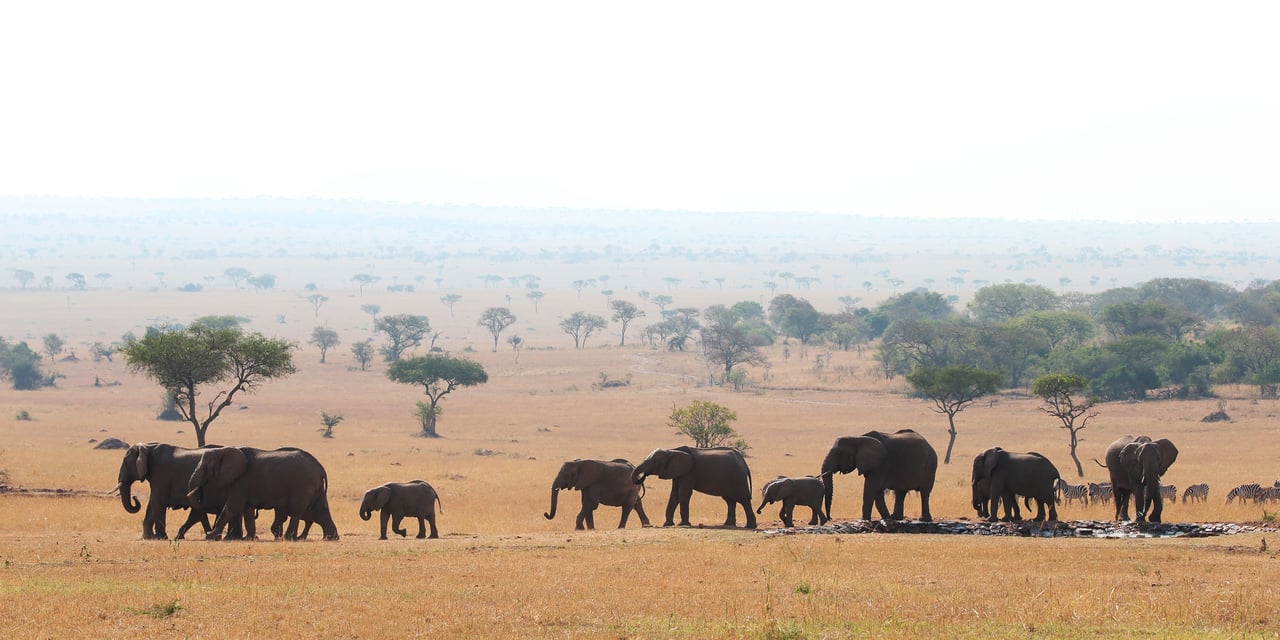
Elephant— large herds use the corridor; drawn to the permanent river water
Buffalo— abundant. The Western Corridor holds some of the Serengeti's largest herds.
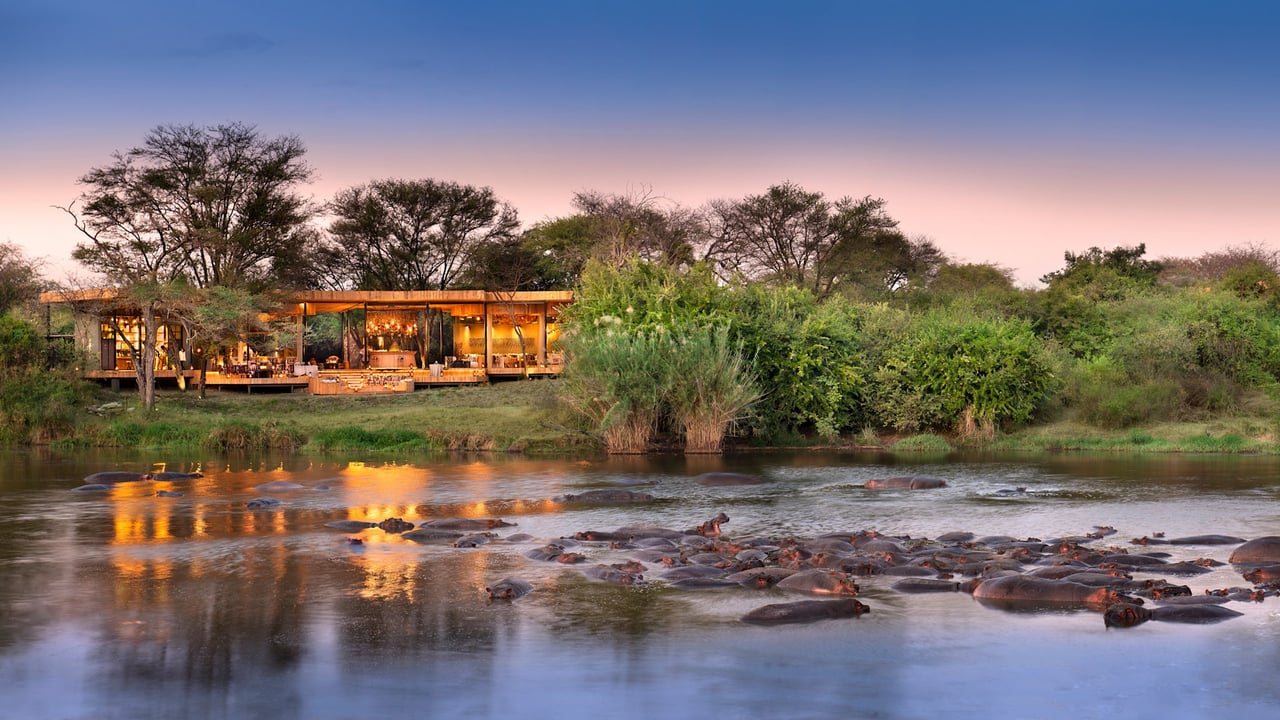
Hippo— permanent pools along the Grumeti; high density in the deeper sections
Topi— common on the open plains; less visible in the busier sectors
Cheetah— present but less concentrated than Ndutu; better seen in open grassland sections
The riverine forest and thicket along the Grumeti also produce excellent birding - green-backed heron, African fish eagle, pied kingfisher, and a range of woodland species that don't appear on the open plains. This is not a marketing point for birders; it is relevant to any traveller who wants texture in their safari rather than a pure numbers-of-species game drive.
The dry season months of August through October, after the migration has moved north, are when the resident predators of the Western Corridor concentrate near the river. Permanent water draws prey; prey draws predators. The game-viewing in this period is excellent and the competition for space - again - is low.
Best Camps in the Western Corridor
The Western Corridor's camp situation is one of its clearest advantages over the central Serengeti. The Grumeti concession - a private reserve adjacent to the national park - operates under exclusive use agreements that limit vehicle numbers and enforce anti-poaching coverage over a vast area. The camps here are not competing with Seronera for space. They have the landscape largely to themselves
Singita Grumeti — Faru Faru Lodge & Sabora Tented Camp
Singita's Grumeti concession covers 350,000 acres of private land. Faru Faru is lodge-style on the river; Sabora is classic tented camp on open plains. The guiding is among the best in East Africa, the concession access means off-road driving, and the conservation work here is serious. Eye-watering rates. Worth understanding as a benchmark even if it's outside your budget.
&Beyond Grumeti Serengeti Tented Camp
Sits directly on the Grumeti River. Ten tents on elevated platforms; the hippos are audible at night. Migration season access to the crossing points is excellent from here. &Beyond's guiding and community programmes are well-regarded. Considerably more accessible on price than Singita while delivering a comparable wildlife experience.
Kirawira Serena Camp
An Edwardian-style tented camp at the western end of the corridor. The atmosphere is deliberately period-piece colonial. Good value compared to the private concession camps. Located within the national park boundary rather than the private concession, which means standard public park rules apply - no off-road driving, shared access with other vehicles.
Note on Availability
Book June 12–18 months out
The Western Corridor is underrated but not unknown to the operators who know the Serengeti properly. June availability at the top camps is limited. If you're planning a migration crossing trip to the Grumeti, begin conversations with your operator well ahead of the season - not three months before departure.
Western Corridor vs Northern Serengeti
The comparison comes up constantly. They are different experiences, not different versions of the same one.
This guide
Western Corridor
Migration window: May to July
Grumeti River crossings
Giant Nile crocodiles - defining feature
Significantly fewer vehicles
Private concession access available
Strong resident wildlife year-round
Green season photography in May
Higher-end camp infrastructure
Northern Serengeti (Kogatende)
Migration window: July to October
Mara River crossings - the famous ones
Largest crossing volumes of the year
More vehicles - can be congested
Some private concession access
Resident big cats well-established
Dry season - dust, clear skies, classic light
Widest range of camp options
If you can only do one section of the migration and you are traveling between May and July, the Western Corridor is the better call. You see a crossing. You see it without sixty other vehicles. The crocodiles are an experience that the Mara, for all its scale, does not replicate.
If you're traveling in August through October, you go north. There is no migration in the Western Corridor in those months. The Mara crossings are happening and that's where you need to be.
The best Serengeti safari combines both - a week in the Western Corridor in June, then fly north to Kogatende in late July or August. That itinerary covers both crossings, both crocodile systems, and the full arc of the migration in a single trip. It requires budget and planning, but it is the definitive Serengeti migration experience.
Practical Information
Getting there
The practical entry point is Grumeti Airstrip, which receives scheduled light aircraft from Arusha (via Coastal Aviation, Air Excel, or Auric Air) and connections from Seronera and Kilimanjaro. Flying in is the standard approach - the road from Arusha takes the better part of a day even in good conditions, and the Serengeti's roads in the wet season require a serious 4x4 and a tolerance for delay.
Fees and access
Camps within the Grumeti Private Reserve sit outside the national park boundary and operate under their own concession fees, which are typically included in the all-inclusive camp rate. National park sections of the corridor require standard TANAPA park fees - currently charged per person per day in USD. Your operator or camp will manage these; confirm what's included before you arrive.
What to pack
The Western Corridor in May still carries residual rain. Pack a lightweight waterproof layer. June is transitioning to dry - layering is still useful for early morning game drives, when the temperature on an open vehicle at 6am is considerably colder than it will be at 9am. The standard safari packing list applies; neutral colours, no white, no camouflage.
On green season (May): The Serengeti in May is not a compromise. The photography is extraordinary - stormy light, green plains, dramatic skies. The wildlife is present and concentrated near water after the rains. Camp rates drop by 30–40% from peak. Travellers who avoid May because it's "rainy season" are making a mistake based on incomplete information.
The Honest Verdict
The Western Corridor is what happens when a good part of a great ecosystem gets skipped by the majority of itineraries. The wildlife is there. The crossings are there. The crocodiles - unambiguously, spectacularly - are there. What's missing is the crowds, and that is not a problem.
The case for coming here instead of, or before, the Northern Serengeti is straightforward: you see the same migration event with a fraction of the vehicle pressure, earlier in the calendar, at a camp that often has better infrastructure than anything in the north at the same price point. June in the Western Corridor is the Serengeti working as it should.
The case against is timing. If you can't make May through July work, the corridor is not your migration destination. Come back in the dry season for the resident predators and the crocodile pools - still excellent, still worth it - but the migration window is what defines this sector.
Back to the Serengeti Manual →
People Also Ask
When is the best time to visit the Western Corridor of the Serengeti?
May to July is the window. The migration pushes through the Western Corridor during these months, with the Grumeti River crossings peaking in June. May brings the tail end of the long rains - camps are cheaper and the landscape is extraordinary. By July the herds have largely moved north toward the Mara River.
What is the Grumeti River crossing?
The Grumeti River crossing is a Great Migration river crossing that occurs in the Western Corridor, typically in June. Wildebeest and zebra cross the Grumeti River, which is patrolled by some of the largest Nile crocodiles on the continent. It is less famous than the Mara crossings further north - which means significantly fewer vehicles and a more immersive, uninterrupted experience.
How does the Western Corridor compare to the Northern Serengeti?
They operate at different points in the migration calendar. The Western Corridor is May to July, with the Grumeti crossings. The Northern Serengeti (Kogatende) is July to October, with the Mara crossings. The north gets more traffic and more coverage. The Western Corridor offers comparable wildlife events with a fraction of the vehicle pressure
Are there good camps in the Western Corridor?
Yes - some of the best in the ecosystem. Singita Grumeti's private concession camps (Faru Faru Lodge and Sabora Tented Camp) and &Beyond Grumeti Serengeti Tented Camp are both standout options that combine wildlife access, guiding quality, and exclusivity that the busier central Serengeti cannot match. Book June availability 12–18 months in advance
Is the Western Corridor worth visiting outside of migration season?
Yes. The Western Corridor holds strong resident populations of lion, leopard, elephant, buffalo, hippo, and - most distinctively - very large Nile crocodiles year-round. The Grumeti River is a permanent water source that concentrates wildlife throughout the dry season. Outside the migration window it is quieter still, which for many travelers is the point